How to Build a Balanced Meal: The Beginner’s Guide
Building a balanced meal doesn’t have to involve complicated calculations, strict food rules, or expensive ingredients. For many beginners, the hardest part of healthy eating is simply knowing what to put on the plate.
A balanced meal combines different types of foods so that you get a useful mix of nutrients, including protein, carbohydrates, healthy fats, vitamins, minerals, and fiber. The exact combination can change from meal to meal, but understanding a few basic principles can make meal planning much easier.
Whether you’re preparing breakfast before work, packing lunch for the day, or making dinner for your family, learning how to build balanced meals can help you create a more consistent approach to nutrition.
This guide explains the basic components of a balanced meal, how to combine them, common mistakes to avoid, and practical examples you can use at home.
What Is a Balanced Meal?
A balanced meal contains a combination of foods from different nutritional categories rather than relying heavily on one type of food.
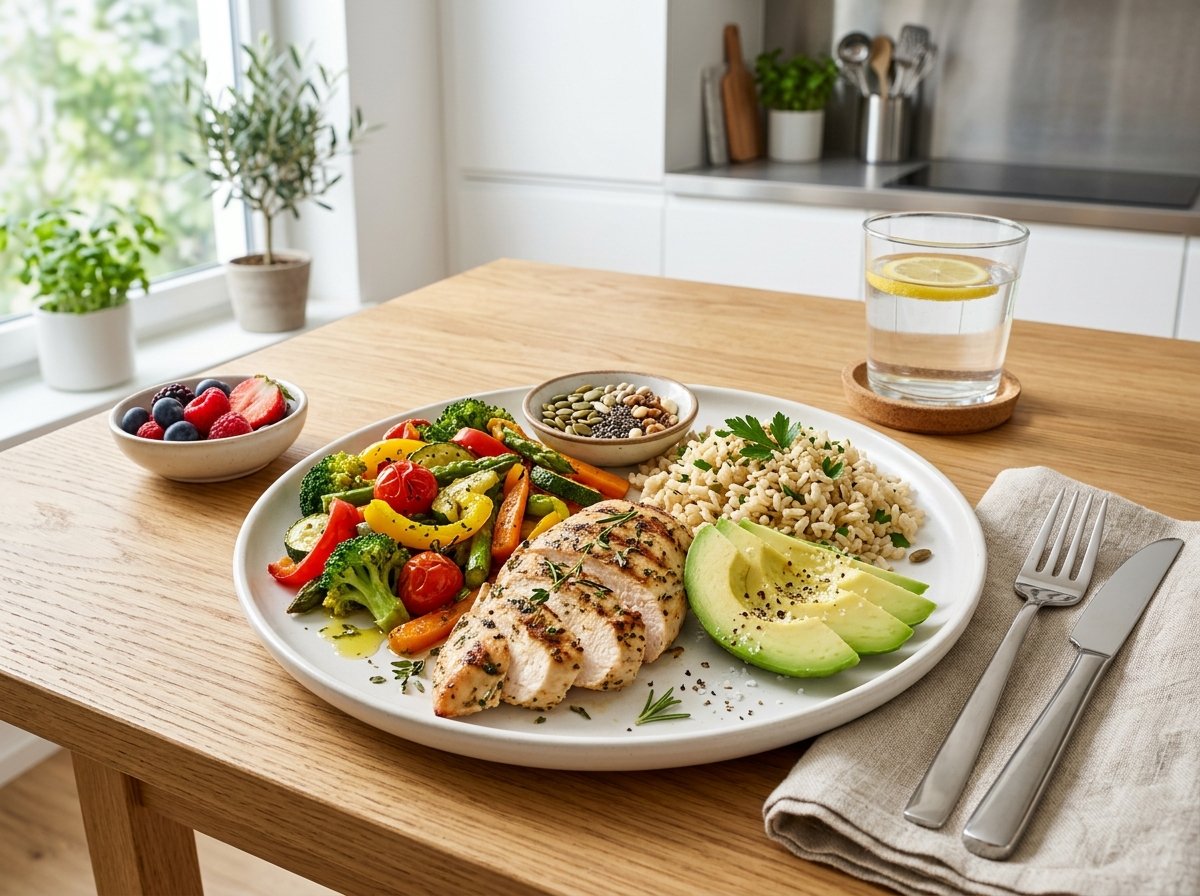
A simple meal-building approach is to include vegetables or fruit, a protein source, a carbohydrate source, and an appropriate amount of healthy fat.
You don’t need every component to appear in identical amounts at every meal. The goal is to create an overall eating pattern that provides variety and useful nutrients.
The Four Basic Components of a Balanced Meal
For beginners, it can be helpful to think about four main components:
- Vegetables and fruits
- Protein
- Carbohydrates
- Healthy fats
Each category can provide different nutrients, and combining them can make meals more satisfying and nutritionally diverse.
1. Add Plenty of Vegetables and Fruits
Vegetables and fruits can provide vitamins, minerals, fiber, and many naturally occurring plant compounds.
Vegetables can be fresh, frozen, or appropriately prepared from canned options. You don’t need to buy expensive specialty produce.
Try adding vegetables such as spinach, carrots, tomatoes, cucumbers, peppers, broccoli, cauliflower, green beans, or leafy greens.
Fruit can also be included as part of a meal. Berries, apples, bananas, oranges, pears, mangoes, and other fruits can add natural sweetness and useful nutrients.
A practical approach is to make plant foods a regular part of your meals rather than trying to make every plate look perfect.
2. Include a Protein Source
Protein is an important part of a balanced meal. It contributes to the maintenance and repair of body tissues and is involved in many processes throughout the body.
There are many ways to add protein to a meal.
- Eggs
- Chicken
- Fish
- Lean meat
- Greek yogurt
- Milk
- Beans
- Lentils
- Chickpeas
- Tofu
- Nuts and seeds
The best choice depends on your preferences, dietary pattern, budget, and nutritional needs.
You don’t have to eat the same protein source every day. Rotating between different options can make your meals more interesting and provide greater variety.
3. Choose a Carbohydrate Source
Carbohydrates are an important source of energy. Foods containing carbohydrates include grains, potatoes, beans, fruits, and many other foods.
When possible, choose carbohydrate sources that also provide fiber and other nutrients.
Examples include oats, brown rice, whole-grain bread, whole-wheat pasta, quinoa, potatoes, sweet potatoes, beans, and lentils.
There is no need to automatically remove carbohydrates from a balanced meal. Instead, consider the type of carbohydrate, the portion, and how it fits with the other foods on your plate.
4. Include Healthy Fats
Healthy fats can be included in meals through foods such as avocado, nuts, seeds, olive oil, and certain types of fish.
Fat can contribute to the flavor and satisfaction of a meal, while certain dietary fats are important sources of essential fatty acids.
Because fats are relatively energy-dense, a moderate amount is often enough to complement a meal.
How to Use the Balanced Plate Method
One simple visual strategy is to imagine your plate divided into sections.
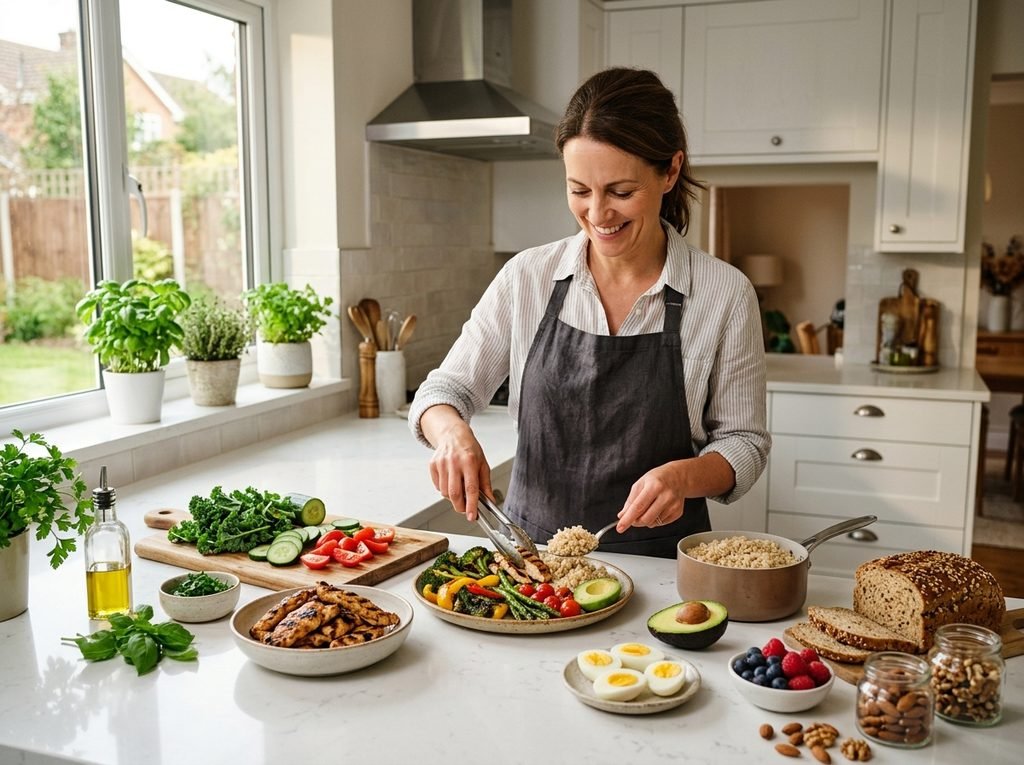
You can think of roughly half the plate as vegetables and other plant foods, with the remaining space divided between protein and a carbohydrate source.
A small amount of healthy fat can then be included through foods or cooking ingredients such as olive oil, avocado, nuts, or seeds.
This is a flexible framework rather than a strict mathematical rule. Your meals don’t need to look exactly the same every time.
Balanced Breakfast Ideas
Breakfast can be balanced just like lunch or dinner.
For example, oatmeal can be combined with Greek yogurt, berries, and a small amount of nuts.
Another option could be eggs with whole-grain toast and vegetables, along with a piece of fruit.
If you prefer a quick breakfast, plain yogurt with fruit, oats, and seeds can be prepared in only a few minutes.
The key is to avoid building breakfast entirely around one type of food when a more balanced combination is practical.
Balanced Lunch Ideas
A simple lunch could include grilled chicken, brown rice, and mixed vegetables.
A vegetarian option might combine chickpeas or lentils with whole grains and a large serving of vegetables.
You could also make a whole-grain sandwich with chicken, tuna, eggs, or another protein source and add vegetables such as lettuce, tomatoes, and cucumber.
If you’re packing lunch for work, prepare the components in advance so that assembling the meal takes only a few minutes.
Balanced Dinner Ideas
Dinner can follow the same basic structure.
For example, baked fish can be served with roasted vegetables and potatoes.
Another option is chicken with brown rice and a mixed vegetable stir-fry.
For a plant-based meal, lentils or beans can be paired with rice, vegetables, and a small amount of avocado or another healthy fat source.
There are countless combinations, so focus on the basic components rather than trying to follow a fixed list of meals.
Why Protein Can Make Meals More Satisfying
Including protein in meals can help make them more satisfying for many people.
If a meal consists primarily of refined carbohydrates or sugary foods, you may find yourself hungry again relatively quickly.
Adding a protein source can create a more substantial meal.
For example, instead of eating only toast for breakfast, you could add eggs or yogurt. Instead of eating only rice at lunch, you could combine it with beans, chicken, fish, tofu, or another protein source.
Don’t Forget Fiber
Fiber is another important part of balanced meals.
It can be found in vegetables, fruits, beans, lentils, whole grains, nuts, and seeds.
Choosing foods from these categories regularly can help increase the variety of fiber in your diet.
If you’re not used to eating much fiber, increase your intake gradually and make sure you’re drinking adequate fluids.
Portion Sizes Matter, But Don’t Obsess Over Them
Portion needs can vary significantly between people.
Your age, body size, activity level, appetite, goals, and individual circumstances can all influence how much food you need.
Instead of trying to make every meal exactly the same size, learn to recognize your hunger and fullness cues while maintaining a generally balanced plate.
If you’re consistently hungry after meals, you may need more food. If meals regularly leave you uncomfortably full, consider adjusting portions.
Balance Your Meals, Not Every Individual Bite
Healthy eating should be viewed over time rather than judged meal by meal.
You may have a breakfast that contains more carbohydrates and less protein, followed by a lunch that contains more protein and vegetables.
One meal doesn’t have to contain every possible nutrient in perfect proportions.
What matters more is the overall pattern across your day and week.
How to Make Balanced Meals More Convenient
A balanced meal is much easier to maintain when the ingredients are readily available. One of the biggest challenges people face is not knowing what to eat, but having limited time to prepare food.
You can make the process easier by preparing a few basic ingredients in advance.
For example, you could cook a batch of rice or another whole grain, prepare several portions of chicken or beans, wash vegetables, and keep fresh fruit available.
These ingredients can then be combined in different ways throughout the week.
You don’t have to prepare complete meals every Sunday. Preparing individual ingredients can give you more flexibility while still reducing cooking time.
Build Meals Around Foods You Actually Enjoy
A healthy meal doesn’t need to contain foods you dislike.
If you don’t enjoy broccoli, there are many other vegetables you can choose. If you don’t like brown rice, you can use oats, potatoes, whole-grain bread, quinoa, or another carbohydrate source.
Healthy eating becomes much easier when your meals are enjoyable.
Experiment with herbs, spices, sauces, cooking methods, and different combinations until you find meals that you genuinely look forward to eating.
Use Different Cooking Methods
The way you prepare food can dramatically change its flavor and texture.
Vegetables can be roasted, steamed, grilled, sautéed, or added to soups and stews.
Protein sources can be baked, grilled, roasted, steamed, or cooked in a pan using an appropriate amount of oil.
Trying different cooking methods can help prevent your meals from becoming repetitive.
Simple Balanced Meal Combinations
You don’t need complicated recipes to create balanced meals.
- Chicken bowl: Grilled chicken, brown rice, mixed vegetables, and avocado.
- Egg breakfast: Eggs, whole-grain toast, tomatoes, spinach, and fruit.
- Fish dinner: Baked fish, potatoes, green vegetables, and a small amount of olive oil.
- Vegetarian bowl: Lentils, rice, roasted vegetables, and seeds.
- Yogurt breakfast: Greek yogurt, oats, berries, and nuts.
- Bean lunch: Beans, whole-grain bread or rice, salad, and avocado.
These are examples rather than strict recipes. You can replace ingredients based on your preferences and what you have available.
What If You Eat Out?
You can still make balanced choices when eating at a restaurant.
Look for meals that include a protein source, vegetables, and a carbohydrate source.
For example, grilled chicken with vegetables and rice can provide a relatively balanced combination. A sandwich can be paired with a salad or vegetables. A rice bowl can include vegetables and a protein source.
You don’t have to make the perfect choice every time you eat out.
Simply look for opportunities to create a reasonably balanced meal.
How to Balance Your Favorite Foods
You don’t have to remove pizza, burgers, pasta, desserts, or other favorite foods from your diet.
Instead, consider how you can make the overall meal more balanced.
For example, if you’re having pizza, you might add a side salad or vegetables. If you’re having pasta, you could include vegetables and a protein source.
This approach allows you to enjoy foods you love while still paying attention to overall nutrition.
Don’t Rely Only on Calories
Calories are one aspect of nutrition, but they don’t tell you everything about the quality of a food.
Two foods can contain similar amounts of energy while providing very different amounts of protein, fiber, vitamins, minerals, and other nutrients.
For beginners, focusing exclusively on calorie numbers can sometimes distract from the bigger picture.
Instead, consider the overall composition of your meals and the variety of nutritious foods you consume.
Balanced Meals for Busy People
Busy schedules don’t mean you have to abandon balanced eating.
Keep convenient foods available so you can assemble meals quickly.
Frozen vegetables can be useful when fresh produce isn’t available. Canned beans can save preparation time. Eggs can be cooked quickly. Greek yogurt can provide an easy protein source. Pre-washed vegetables and fruit can reduce preparation work.
Having simple options available can make nutritious eating more realistic during busy days.
How to Plan a Balanced Week
Instead of deciding what to eat every day at the last minute, spend a few minutes planning several meals in advance.
Start by choosing a few protein sources, several vegetables, two or three carbohydrate options, and some fruits.
Then combine them in different ways.
For example, chicken can be used in a rice bowl one day and a whole-grain wrap another day. Vegetables can be roasted for dinner and used in an omelet the following morning.
This approach reduces food waste and gives you more variety without requiring completely different ingredients for every meal.
Common Balanced Meal Mistakes
Making Meals Too Small
Some people become so focused on eating healthy that they make their meals unnecessarily small.
If you’re consistently hungry after eating, your meals may not contain enough food to meet your needs.
Eating Too Much of One Food Group
A large bowl of rice with very little protein or vegetables may not be as balanced as combining smaller portions of several food groups.
Forgetting Protein
Meals based mainly on bread, rice, pasta, or other carbohydrate foods may benefit from adding a protein source.
Avoiding All Dietary Fat
Healthy fats can be part of a balanced eating pattern. Instead of eliminating fat completely, choose appropriate sources and portions.
Making Healthy Eating Too Complicated
You don’t need a different recipe for every meal. Simple combinations of familiar foods can be just as useful.
How to Build a Balanced Meal in Five Steps
- Choose a protein: Start with chicken, fish, eggs, beans, lentils, yogurt, tofu, or another protein source.
- Add vegetables: Include one or more vegetables you enjoy.
- Choose a carbohydrate: Add rice, potatoes, oats, whole-grain bread, pasta, or another suitable option.
- Add healthy fat: Include avocado, nuts, seeds, olive oil, or another appropriate source.
- Adjust the portion: Consider your hunger, activity level, and individual nutritional needs.
This five-step process can be used for breakfast, lunch, dinner, and many snacks.
Frequently Asked Questions
What should a balanced plate look like?
A simple balanced plate can include vegetables or fruit, a protein source, a carbohydrate source, and an appropriate amount of healthy fat. The exact portions can vary depending on individual needs.
Do I need to eat vegetables at every meal?
Not necessarily. However, including vegetables regularly throughout your day can help increase your intake of fiber, vitamins, minerals, and other nutrients.
Can rice be part of a balanced meal?
Yes. Rice can be a carbohydrate source in a balanced meal. You can combine it with protein, vegetables, and an appropriate amount of healthy fat.
Can potatoes be part of healthy eating?
Yes. Potatoes provide carbohydrates and several nutrients. Their role in a meal depends partly on preparation method and portion size.
What is the most important part of a balanced meal?
There isn’t one single most important food. A balanced meal works by combining different food groups and providing a variety of nutrients.
Do I have to measure everything?
No. Many beginners can use visual portions and hunger cues rather than weighing every ingredient. More precise tracking may be useful for specific goals, but it isn’t required for everyone.
Can a vegetarian meal be balanced?
Yes. Vegetarian meals can include protein sources such as beans, lentils, chickpeas, tofu, dairy products, eggs, nuts, and seeds alongside vegetables and carbohydrate sources.
Final Thoughts
Learning how to build a balanced meal is one of the most useful skills you can develop when improving your nutrition.
You don’t need complicated recipes, expensive ingredients, or a strict diet plan. Start by thinking about the basic components of your meal: vegetables or fruit, protein, carbohydrates, and healthy fats.
From there, choose foods you enjoy and adjust portions according to your individual needs.
Remember that balance doesn’t mean perfection. Some meals will naturally contain more of one food group than another. What matters most is the overall pattern of your diet.
Prepare convenient ingredients when possible, keep nutritious foods available, experiment with different flavors, and don’t be afraid to enjoy your favorite foods occasionally.
The goal is to develop a way of eating that is nutritious, practical, enjoyable, and sustainable.
Once you understand the basic structure of a balanced meal, healthy eating becomes much less complicated. Instead of asking whether a particular food is “good” or “bad,” you can start asking a more useful question: how does this food fit into the overall meal?
That simple change in perspective can make nutrition more flexible and much easier to maintain for the long term.
Balanced Meal Checklist
- Include a protein source.
- Add vegetables or fruit.
- Choose a suitable carbohydrate source.
- Include an appropriate amount of healthy fat.
- Consider fiber-rich foods.
- Adjust portions according to hunger and individual needs.
- Use foods you actually enjoy.
- Keep convenient ingredients available.
- Plan several meals ahead when possible.
- Don’t aim for perfection at every meal.