How to Build Muscle: A Beginner’s Guide to Muscle Growth
Building muscle is a goal shared by many people who start exercising. Some want to become stronger, some want to improve their physique, and others simply want to develop a healthier and more capable body. Whatever your reason, muscle growth does not require an unnecessarily complicated fitness routine.
For beginners, the most important principles are surprisingly simple: perform resistance training consistently, provide your body with enough nutrition, recover properly, and gradually increase the challenge placed on your muscles.
Muscle growth takes time. There is no single exercise, supplement, or workout that can instantly transform your body. Instead, successful muscle development comes from repeating the right habits over many weeks and months.
This guide explains the fundamentals of muscle growth and provides practical strategies beginners can use to create a sustainable approach to building muscle.
What Does Muscle Growth Mean?
Muscle growth, also called muscular hypertrophy, refers to an increase in the size of muscle tissue.
When you perform resistance exercises, your muscles are exposed to a training stimulus. Your body responds to that stimulus through a series of adaptations that can improve your ability to handle resistance.
Over time, consistent resistance training combined with adequate nutrition and recovery can contribute to increased muscle size.
Muscle growth is different from simply becoming stronger. Strength can improve because your nervous system becomes more efficient at performing a movement, while muscle size involves changes in the muscle itself.
Why Resistance Training Is Essential
Resistance training provides the primary stimulus for muscle development.
You can create resistance using dumbbells, barbells, machines, resistance bands, cables, or your own body weight.
The important factor is that the muscles are challenged sufficiently and consistently.
Beginners can start with relatively simple exercises and gradually make them more challenging as their fitness improves.
Choose Effective Compound Exercises
Compound exercises involve multiple joints and muscle groups at the same time.
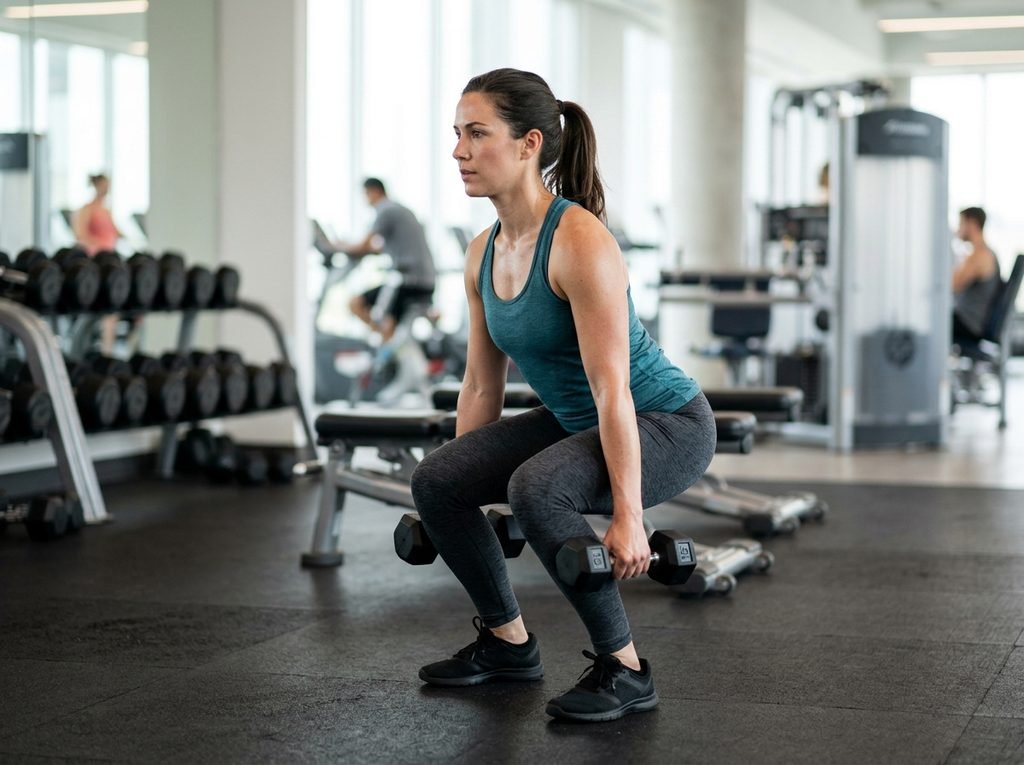
Examples include squats, presses, rows, lunges, deadlift variations, and pull-ups or pulldowns.
These exercises can be particularly useful because they allow you to train several muscles efficiently within a relatively short workout.
You don’t need to perform every compound exercise available. Select movements that fit your goals, equipment, experience, and physical abilities.
Don’t Ignore Isolation Exercises
Although compound movements are useful, isolation exercises can also have a place in a muscle-building program.
Isolation exercises generally focus on a smaller number of muscles or a particular joint movement.
Examples include biceps curls, triceps extensions, lateral raises, and leg extensions.
These exercises can be added after your primary movements to provide additional training volume for specific muscles.
How Often Should You Train?
Muscle growth doesn’t require training every day.
A beginner may make good progress with a routine that trains the major muscle groups several times throughout the week while allowing sufficient recovery between demanding sessions.
The ideal frequency depends on your schedule, training experience, exercise selection, total training volume, and recovery capacity.
A consistent routine performed several times per week is generally more useful than an extremely demanding routine that you cannot maintain.
What Is Training Volume?
Training volume describes the amount of work you perform during your workouts.
It can be considered through factors such as the number of exercises, sets, repetitions, and resistance used.
Increasing training volume gradually can help provide an ongoing stimulus for adaptation.
However, more volume isn’t always better. If you continually add more work without sufficient recovery, your performance may suffer.
Understanding Repetitions
A repetition is one complete performance of an exercise.
For example, performing one complete squat from the starting position and back again counts as one repetition.
Different repetition ranges can be used in resistance training.
Beginners should focus less on finding a magical repetition number and more on performing controlled repetitions with appropriate resistance.
The resistance should be challenging while still allowing you to maintain good technique.
Why Progressive Overload Matters
Progressive overload is one of the most important principles of muscle development.
It means gradually increasing the demands placed on your muscles over time.
You can create progression by adding a small amount of resistance, performing additional repetitions, increasing sets, improving exercise technique, or using a more challenging variation.
Progress should be gradual rather than dramatic.
If you increase the resistance too quickly, your technique may deteriorate and recovery may become more difficult.
How to Know If You’re Progressing
Progress isn’t limited to seeing bigger muscles in the mirror.
You may notice that you can perform more repetitions with the same resistance, use slightly heavier weights, control exercises better, or complete workouts with less fatigue.
Taking occasional progress photos or recording measurements can also help you recognize changes that aren’t obvious from day to day.
Keep in mind that body composition changes can occur gradually, so don’t expect visible differences after every workout.
The Importance of Protein
Nutrition plays an important role in muscle development.
Protein provides amino acids that your body uses for maintaining and building tissues.
Good protein sources include eggs, dairy products, poultry, fish, lean meat, beans, lentils, chickpeas, tofu, tempeh, nuts, and seeds.
Instead of relying entirely on supplements, focus on building regular meals around a variety of nutritious protein sources.
Do You Need a Calorie Surplus?
People trying to maximize muscle growth often discuss eating a calorie surplus, meaning consuming more energy than the body uses.
Additional energy can support muscle-building goals, but the appropriate amount varies between individuals.
A very large calorie surplus is not automatically better because excessive weight gain can include increases in body fat.
Beginners should focus on consistent resistance training, adequate protein, balanced nutrition, and recovery before becoming overly focused on precise calorie calculations.
Don’t Forget Carbohydrates
Protein often receives most of the attention in muscle-building discussions, but carbohydrates can also play an important role.
Carbohydrate-rich foods can provide energy for training and can be part of a balanced diet.
Foods such as rice, potatoes, oats, whole-grain bread, pasta, fruits, and other carbohydrate sources can fit into a muscle-building eating pattern.
Healthy Fats Are Important Too
Dietary fats should not be eliminated simply because you’re trying to build muscle.
Healthy fat sources include avocados, nuts, seeds, olive oil, and certain fish.
Fats provide energy and support several normal functions in the body.
A muscle-building diet should therefore contain a balance of protein, carbohydrates, fats, fruits, vegetables, and other nutrient-rich foods.
Recovery Is Part of Muscle Growth
Your muscles don’t grow simply because you exercise. Recovery is an essential part of the process.
After a demanding workout, your body needs time to recover and adapt.
Training the same muscles intensely every day without sufficient recovery can make it harder to maintain performance.
Allow appropriate rest between challenging sessions and pay attention to signs of excessive fatigue.
Why Sleep Matters
Sleep is another important part of recovery.
Consistently getting enough quality sleep can support physical recovery, energy levels, and exercise performance.
Trying to compensate for inadequate sleep by continually increasing workout volume is unlikely to be an effective strategy.
Create a regular sleep schedule and give your body adequate opportunity to recover between training sessions.
How to Structure a Muscle-Building Workout
A beginner muscle-building workout doesn’t need to contain dozens of exercises. A simple routine that covers the major muscle groups can be highly practical.
A typical full-body session might include a squat or leg-press movement, a pushing exercise, a pulling exercise, a hip-hinge movement, and one or two smaller isolation exercises.
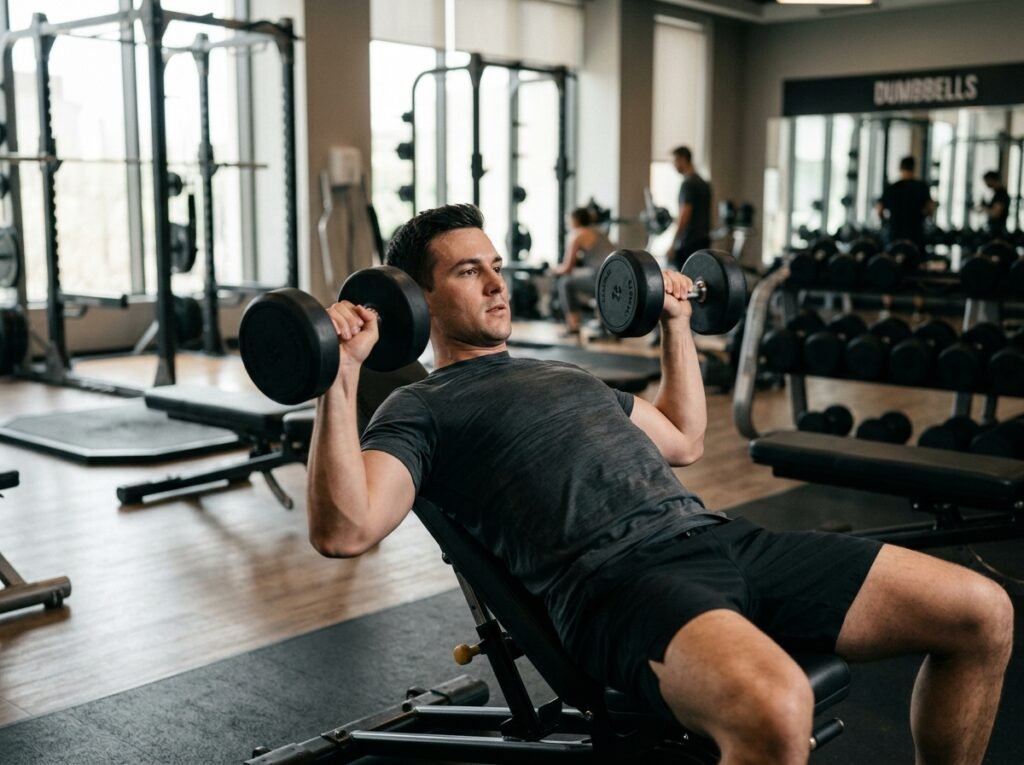
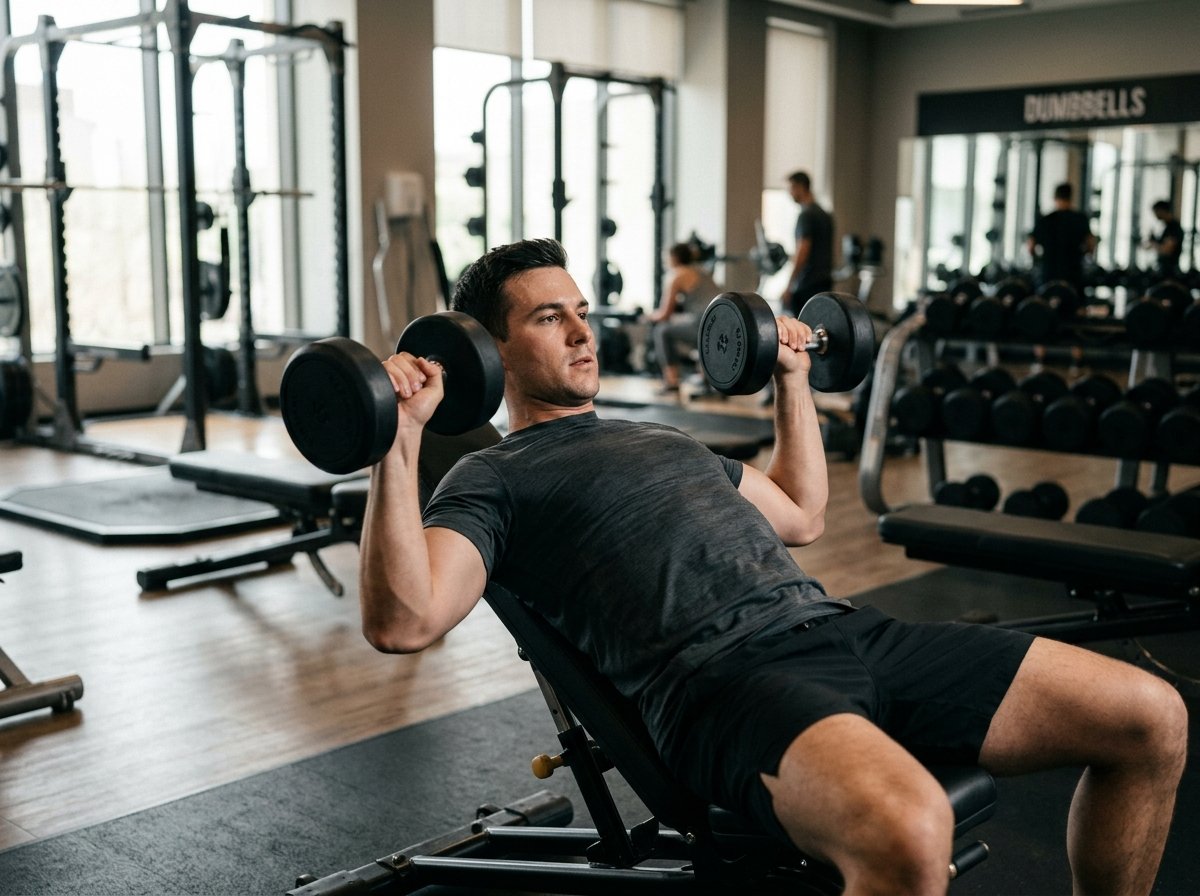
For example, a workout could include squats, dumbbell presses, rows, Romanian deadlifts, lateral raises, and biceps curls.
The exact exercises can be adjusted according to your equipment, experience, mobility, and personal preferences.
Full-Body vs Split Workouts
Beginners often wonder whether they should use a full-body routine or divide workouts into different muscle groups.
Both approaches can work.
A full-body routine trains several major muscle groups during each session and can be convenient when you only have a few days available for exercise.
A split routine divides training across different days, such as upper body and lower body or specific muscle groups.
For beginners, a full-body routine can be a simple starting point because it allows you to practice important movements regularly without requiring a complicated weekly schedule.
How Many Sets Should You Perform?
The appropriate number of sets depends on your experience, exercise selection, training frequency, and total weekly workload.
Beginners generally don’t need extremely high training volume when they are first learning the movements.
Starting with a manageable amount of work allows you to evaluate how your body responds and gradually increase training volume as your fitness improves.
If you finish every workout completely exhausted, that doesn’t necessarily mean the workout was more effective.
How Hard Should Your Sets Be?
Muscle-building sets should generally be challenging, but beginners don’t need to take every set to complete muscular failure.
Leaving some repetitions in reserve can allow you to maintain better technique and recover more effectively.
As you gain experience, you can learn how close to muscular failure you should train on different exercises.
For beginners, controlled repetitions and consistent progression are more important than constantly pushing to absolute failure.
Why Exercise Technique Matters
Good technique allows you to control the movement and place appropriate stress on the muscles you’re trying to train.
When beginners use excessive weight, they may compensate by changing their body position or using momentum.
This can make an exercise less effective and may increase unnecessary stress on joints and other tissues.
Start with resistance that allows you to learn the movement properly. Increase the challenge only when you can maintain control.
Should You Train to Failure?
Training to failure means continuing repetitions until you cannot complete another repetition with proper technique.
It can be used strategically in some training programs, particularly with certain isolation exercises.
However, beginners don’t need to take every set to failure.
Stopping a set when your technique begins to deteriorate can be a practical approach while you’re still learning how to train.
How Long Should You Rest Between Sets?
Rest periods give your muscles and energy systems time to recover before the next set.
The appropriate rest duration depends on the exercise and training intensity.
Large compound movements may require more recovery than smaller isolation exercises.
Don’t feel pressured to immediately begin your next set if you’re still struggling to recover.
Good-quality repetitions are generally more valuable than rushing through the workout simply to finish faster.
Can Bodyweight Exercises Build Muscle?
Yes. Bodyweight exercises can provide meaningful resistance, particularly for beginners.
Exercises such as push-ups, squats, lunges, dips, and certain pulling movements can challenge muscles effectively.
As you become stronger, however, some bodyweight exercises may become too easy.
You can then increase the difficulty through harder variations, additional repetitions, slower controlled movements, or external resistance when appropriate.
Can You Build Muscle at Home?
Yes. A home-based muscle-building routine can work when you have appropriate resistance and follow a progressive training approach.
Dumbbells, adjustable weights, resistance bands, and bodyweight exercises can provide many useful options.
You don’t need a large collection of expensive equipment to begin.
Focus on selecting exercises that allow you to challenge the major muscle groups and gradually increase the difficulty.
How Important Are Supplements?
Supplements are not a requirement for building muscle.
A well-planned diet can provide protein and other nutrients through regular foods.
Some supplements may be useful in specific circumstances, but marketing claims should not replace evidence-based nutrition and training principles.
If you are considering a supplement, evaluate whether you actually need it and whether it is appropriate for your individual situation.
What About Creatine?
Creatine is one of the most researched sports nutrition supplements and is commonly used by people participating in strength training.
It may support performance during repeated high-intensity exercise and can contribute to improvements in strength and muscle development when combined with resistance training.
However, supplements aren’t necessary for everyone.
If you have a medical condition, take medications, or have concerns about using supplements, discuss your options with a qualified healthcare professional.
How Long Does Muscle Growth Take?
Muscle growth is a gradual process.
The rate of progress varies based on training experience, genetics, nutrition, recovery, age, starting body composition, and other factors.
Beginners may experience noticeable improvements relatively quickly because their bodies are adapting to a new training stimulus.
However, significant physical transformation usually requires consistent effort over a much longer period.
Don’t judge your progress based on a single week or workout.
How to Track Muscle-Building Progress
Tracking your workouts is one of the simplest ways to measure progress.
Record the exercises you perform, the resistance used, your repetitions, and the number of sets.
You can also track body measurements or take progress photos periodically if your goal includes changing your physique.
Try to compare measurements under similar conditions rather than checking constantly.
What If Your Progress Stops?
Plateaus can happen.
If your strength or muscle development seems to stop, review your training program and recovery habits.
Ask yourself whether you’re consistently training, progressing your exercises, eating enough nutritious food, consuming adequate protein, and getting sufficient rest.
You may need to make a small adjustment to your training volume, exercise selection, resistance, or recovery routine.
A plateau doesn’t necessarily mean your entire program needs to be replaced.
Common Muscle-Building Mistakes
Changing Exercises Too Often
Constantly switching exercises can make it difficult to track whether you’re improving.
Keep effective movements in your routine long enough to become proficient and measure progress.
Ignoring the Lower Body
Some beginners focus almost entirely on chest and arms.
Training the legs, hips, back, shoulders, and core creates a more balanced approach to strength and muscle development.
Not Eating Enough
Building muscle requires adequate nutrition. If you’re consistently under-eating, it may be harder to support your training and recovery.
Overtraining
More workouts don’t automatically mean more muscle.
Excessive training combined with inadequate recovery can negatively affect performance and consistency.
Expecting Instant Results
Muscle growth takes time.
Focus on long-term progress rather than expecting dramatic changes after a few workouts.
Frequently Asked Questions
Can beginners build muscle quickly?
Beginners can sometimes experience noticeable strength and muscle improvements during the early stages of training, but the rate varies significantly between individuals.
How often should I train each muscle?
There is no single frequency that works for everyone. Many training programs distribute muscle-building work across the week so that each major muscle group receives repeated training while still allowing recovery.
Do I need to lift heavy weights to build muscle?
No. Muscle can be challenged using a range of resistance levels as long as the exercise provides an appropriate training stimulus and progression occurs over time.
Can I build muscle with bodyweight exercises?
Yes. Bodyweight exercises can be effective, especially for beginners. As you become stronger, you may need to increase exercise difficulty or add external resistance.
Should I train every day to build muscle?
No. Recovery is an important part of muscle development. A well-designed routine should balance training with sufficient rest.
Is protein powder necessary?
No. Protein powder is a convenient option, not a requirement. Many people can obtain sufficient protein from regular foods.
Why am I not seeing muscle growth?
Possible factors include insufficient training consistency, inadequate nutrition, lack of progression, insufficient recovery, or simply not allowing enough time for visible changes to occur.
Final Thoughts
Building muscle is a long-term process based on several fundamentals working together.
Resistance training provides the stimulus. Adequate nutrition provides the resources your body needs to support training and recovery. Sleep and rest allow your body to adapt.
You don’t need the most complicated workout program or the largest collection of supplements.
Start with fundamental exercises, learn proper technique, train consistently, and gradually increase the challenge as you become stronger.
Eat a balanced diet that includes sufficient protein and a variety of nutrient-rich foods. Give yourself enough time to recover and don’t underestimate the importance of sleep.
Most importantly, be patient. Muscle growth doesn’t happen overnight. The people who make the most sustainable progress are often those who can maintain good habits for months and years rather than following extreme routines for a few weeks.
Build your routine around consistency, progressive overload, balanced nutrition, and recovery. With time, these simple principles can create a strong foundation for developing muscle and improving overall physical performance.
Beginner Muscle-Building Checklist
- Perform resistance training consistently.
- Focus on compound movements.
- Include useful isolation exercises when appropriate.
- Train the major muscle groups.
- Use progressive overload.
- Track your workouts and progress.
- Eat adequate protein and overall nutritious food.
- Don’t neglect carbohydrates and healthy fats.
- Get sufficient sleep and recovery.
- Avoid changing your workout program constantly.
- Don’t rely on supplements as the foundation of your program.
- Be patient and focus on long-term consistency.