Strength Training for Beginners: A Complete Guide to Getting Started
Strength training is one of the most useful forms of exercise for developing physical strength, supporting muscle health, improving movement, and building a more capable body. Despite its benefits, many beginners feel intimidated when they first consider starting. Terms such as sets, reps, resistance, progressive overload, and training splits can make strength training seem much more complicated than it really is.
The reality is that beginners can start with a very simple routine. You don’t need to spend hours in a gym, use advanced equipment, or lift extremely heavy weights. What matters most in the beginning is learning proper movement patterns, establishing consistency, and gradually challenging your muscles as your fitness improves.
This beginner’s guide explains what strength training is, why it matters, what equipment you need, how often to train, which exercises to start with, and how to build a sustainable routine.
What Is Strength Training?
Strength training is exercise that makes your muscles work against resistance. That resistance can come from free weights, machines, resistance bands, body weight, or other suitable equipment.
Common strength-training exercises include squats, lunges, push-ups, rows, presses, deadlifts, and various pulling and carrying movements.
The objective isn’t necessarily to lift the heaviest possible weight. For beginners, the primary goal is to develop good technique, gradually improve strength, and create a consistent training habit.
Why Should Beginners Strength Train?
Strength training can provide several benefits when performed consistently.
- It can help develop muscular strength.
- It can support muscle maintenance and development.
- It can improve functional movement.
- It can help strengthen bones and connective tissues.
- It can improve physical capacity for everyday activities.
- It can complement cardiovascular exercise.
Strength training can also make everyday tasks such as carrying groceries, climbing stairs, lifting objects, and getting up from a chair feel easier as your physical capacity improves.
Do You Need a Gym?
No. A gym can provide access to a wide variety of equipment, but it isn’t essential for beginning strength training.
Bodyweight exercises can provide resistance without requiring equipment. Exercises such as squats, lunges, push-ups, glute bridges, and planks can be useful starting points.
Resistance bands, adjustable dumbbells, or a pair of suitable weights can also expand your exercise options at home.
The best setup is the one that allows you to train consistently and safely.
Start With Basic Movement Patterns
Rather than trying to memorize dozens of exercises, beginners can benefit from learning a handful of basic movement patterns.
These include squatting, hinging at the hips, pushing, pulling, lunging, carrying, and bracing your core.
Once you understand these patterns, you can perform many different exercises while targeting the major muscle groups of your body.
The Squat Pattern
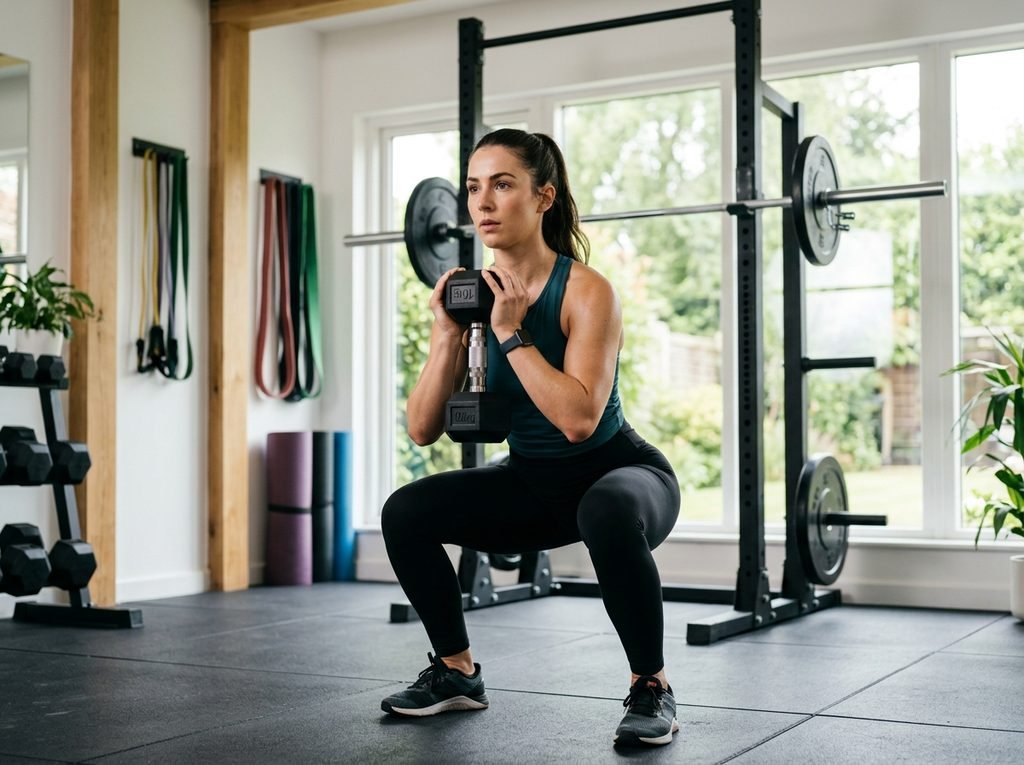
Squatting involves bending the knees and hips while lowering and raising your body under control.
A bodyweight squat is a simple starting exercise for many beginners.
Stand with your feet in a comfortable position, keep your chest controlled, bend your hips and knees, and lower yourself as far as you can comfortably maintain good technique. Then push through your feet to return to the starting position.
Your range of motion should be appropriate for your mobility and experience. You don’t need to force yourself into a deeper squat if you cannot maintain comfortable control.
The Hip Hinge
The hip hinge is an important movement pattern used in exercises such as deadlifts.
Instead of primarily bending through the knees, the movement involves moving the hips backward while keeping the torso controlled.
Learning the hip hinge with little or no weight can help beginners understand how to move through the hips before progressing to loaded exercises.
Proper technique is particularly important when resistance is added.
Pushing Exercises
Pushing exercises involve moving resistance away from your body.
Push-ups are a familiar example. Depending on your current strength, you can modify a push-up by using an elevated surface or another appropriate variation.
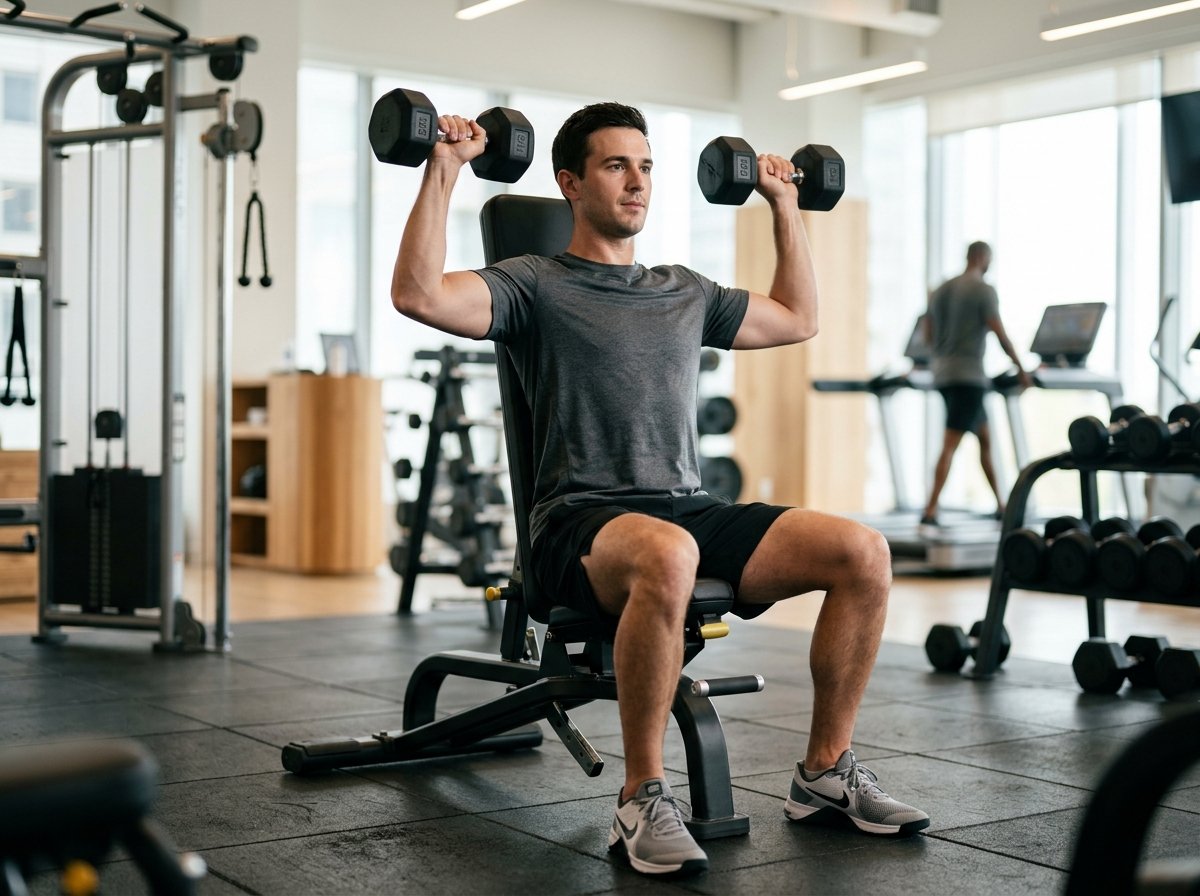
Other pushing exercises include dumbbell presses, machine chest presses, and overhead presses.
Beginners should choose a variation that allows them to maintain controlled technique.
Pulling Exercises
Pulling exercises involve bringing resistance toward your body.
Examples include rows, lat pulldowns, assisted pull-ups, and resistance-band rows.
Pulling movements are useful because they train muscles that may not receive enough attention in routines focused primarily on pushing exercises.
A balanced strength routine should include both pushing and pulling movements.
Lunges and Single-Leg Exercises
Lunges and other single-leg movements challenge the legs while requiring balance and coordination.
Beginners can start with simple reverse lunges or supported variations if standard lunges feel difficult.
Single-leg exercises can also help you identify differences in balance or strength between the two sides of your body.
Core Training
Your core includes muscles around your trunk that contribute to stability and movement.
Core exercises can include planks, dead bugs, bird dogs, and other controlled movements.
You don’t need to perform hundreds of abdominal repetitions to develop a stronger core.
Learning to maintain a stable trunk while moving your arms and legs can be more useful than simply performing large numbers of repetitions.
How Many Days Should Beginners Train?
Beginners don’t need to strength train every day.
For many people, two or three strength-training sessions per week can provide a practical starting point.
Training sessions can be separated by rest or easier activity, giving your body time to recover.
The ideal schedule depends on your experience, available time, recovery, and overall fitness routine.
Why Rest Days Matter
Strength training places stress on your muscles and other tissues. Recovery gives your body time to adapt to that training.
More training isn’t automatically better.
If you constantly train hard without allowing enough recovery, you may experience excessive fatigue, declining performance, or difficulty maintaining your routine.
Rest days can therefore be an important part of a successful strength-training program.
Understanding Sets and Repetitions
A repetition, often called a rep, is one complete performance of an exercise.
A set is a group of repetitions performed together before taking a rest period.
For example, if you perform 10 squats, rest, and then perform another 10 squats, you’ve completed two sets of 10 repetitions.
Beginners don’t need to become obsessed with complicated set and repetition schemes. Start with manageable amounts of work that allow you to maintain good technique.
How Heavy Should You Lift?
Choosing an appropriate resistance is one of the most important considerations for beginners.
The weight should be challenging enough to make the exercise meaningful while still allowing you to perform the movement with controlled technique.
You don’t need to test your maximum strength when starting.
In fact, attempting extremely heavy weights before learning proper technique can make training unnecessarily difficult and increase the risk of injury.
Start conservatively and increase resistance gradually as your strength improves.
What Is Progressive Overload?
Progressive overload means gradually increasing the challenge placed on your body over time.
This doesn’t always mean adding more weight.
You can progress by performing more repetitions, adding a small amount of resistance, improving technique, increasing range of motion when appropriate, or performing the same exercise with better control.
The key is gradual progression rather than dramatic changes from one workout to the next.
Why Technique Matters
Good technique helps you perform exercises effectively and control the resistance throughout the movement.
Beginners should prioritize learning how an exercise should feel and move before worrying about lifting heavier weights.
If you’re unsure about technique, working with a qualified fitness professional can be useful, particularly for complex movements or exercises involving heavier resistance.
Warm Up Before Strength Training
A warm-up can help prepare your body for exercise.
A simple warm-up might include several minutes of light movement followed by dynamic movements related to the exercises you’re about to perform.
You can also perform lighter sets of your first exercise before using your working resistance.
The purpose is to gradually prepare for the session rather than exhaust yourself before the workout begins.
How Long Should a Strength Workout Last?
Beginners don’t need extremely long workouts to make progress. A focused strength session can often be completed within a reasonable amount of time, depending on the number of exercises, sets, rest periods, and your individual fitness level.
Rather than trying to spend as much time as possible in the gym, focus on performing your exercises with good technique and giving each movement enough attention.
A shorter workout that you can perform consistently is generally more useful than an extremely long workout that leaves you exhausted and difficult to maintain.
A Simple Full-Body Beginner Workout
A full-body routine can be a practical way for beginners to train because it allows you to work several major movement patterns during each session.
A basic session could include:
- Bodyweight or goblet squats
- Push-ups or an appropriate pressing variation
- Dumbbell or resistance-band rows
- Hip-hinge movement
- Reverse lunges
- Plank or another controlled core exercise
You don’t have to perform every exercise in exactly the same way. Choose variations that match your current ability and available equipment.
Start with a manageable number of sets and repetitions, concentrate on technique, and gradually increase the challenge as you become more comfortable.
How Much Rest Should You Take?
Rest between sets allows you to recover enough to perform the next set with reasonable technique.
The amount of rest you need depends on the exercise, resistance, training goal, and your fitness level.
Beginners should not feel pressured to rush through their rest periods.
If you are breathing heavily or your muscles feel significantly fatigued, taking additional time before the next set may help you perform the exercise more effectively.
How to Progress as a Beginner
Progress doesn’t need to happen every single workout.
Over several weeks, however, you should look for gradual improvements.
You might begin by performing a certain exercise with body weight and later add resistance. You might perform more controlled repetitions, use a slightly heavier dumbbell, or complete another set.
Keep your progression gradual enough that your technique remains consistent.
Keep a Training Log
A simple training log can make progress easier to recognize.
You can record the exercise, number of sets, repetitions, resistance, and any useful notes about how the workout felt.
You don’t need a complicated fitness application. A notebook or basic digital note can be enough.
After several weeks, you may be able to see that you’re using more resistance, performing more repetitions, or completing exercises with better control.
Strength Training at Home
You can build an effective beginner routine at home with limited equipment.
Bodyweight exercises provide a starting point, while resistance bands and adjustable dumbbells can provide additional options.
A sturdy chair or bench may also be useful for certain exercises, but always make sure any equipment or furniture you use is stable and appropriate for the movement.
Home training can be particularly useful for people who don’t feel comfortable exercising in a gym.
Strength Training at the Gym
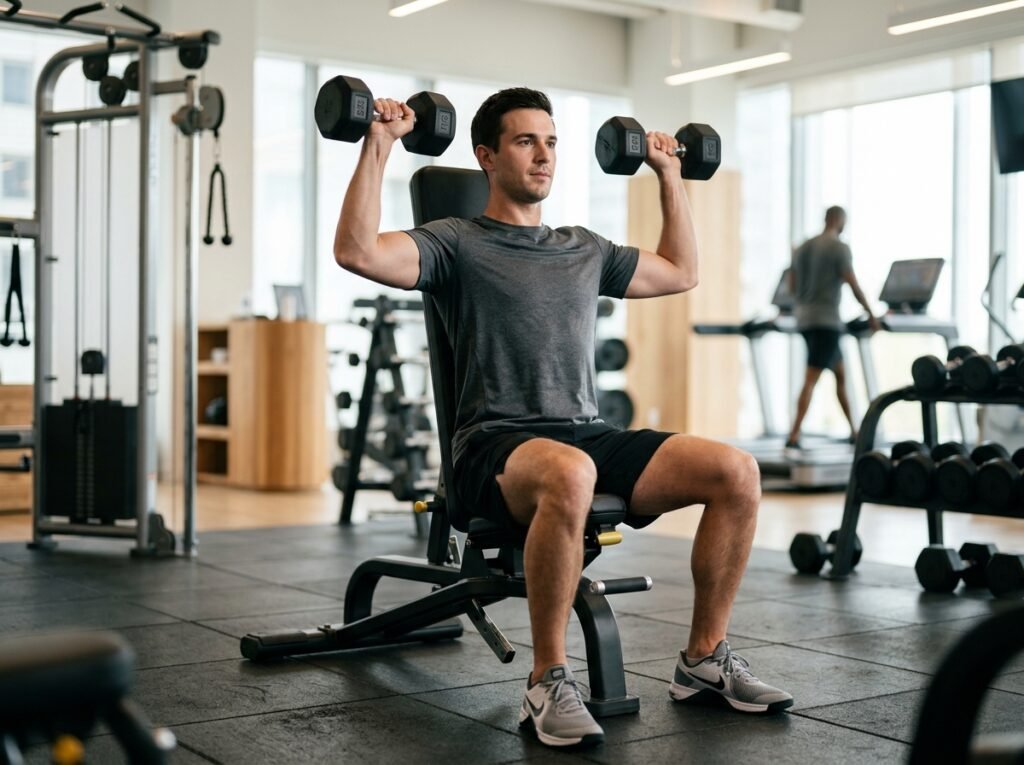
A gym provides access to machines, cables, barbells, dumbbells, benches, and other equipment.
However, having more equipment doesn’t necessarily mean you need to use all of it.
Beginners can benefit from learning a small number of exercises and gradually becoming familiar with the equipment.
If you’re unfamiliar with a machine or free-weight movement, ask a qualified gym professional for guidance rather than guessing how to perform it.
What Should You Wear?
Comfortable clothing that allows you to move freely is generally suitable for strength training.
Choose footwear appropriate for the exercises you’re performing and the training environment.
You don’t need expensive fitness clothing or specialized accessories to begin.
Nutrition and Strength Training
Exercise is only one part of developing strength and supporting muscle health.
Your body also needs adequate nutrition to support training and recovery.
Include protein-rich foods, vegetables, fruits, carbohydrate sources, healthy fats, and adequate fluids as part of your overall eating pattern.
If your goal is to gain muscle, your overall calorie and protein intake may also be relevant.
However, avoid assuming that consuming large amounts of supplements or protein automatically produces better results.
Sleep and Recovery
Recovery is an important part of any strength-training program.
Sleep gives your body time to recover from the physical demands of training.
Adults generally benefit from getting adequate regular sleep, although individual sleep needs can vary.
If you’re consistently training hard while sleeping poorly and feeling exhausted, increasing training volume may not be the best solution.
Common Beginner Mistakes
Trying to Lift Too Much Weight
Beginners sometimes believe that heavier weights automatically mean better workouts.
Using excessive resistance can make it difficult to control the movement and maintain good technique.
Start with a resistance you can handle confidently and progress gradually.
Changing the Program Every Week
Constantly switching exercises can make it difficult to determine whether you’re actually improving.
Give a sensible routine enough time to learn the movements and track progress.
Training Only the Muscles You Can See
Some beginners focus heavily on chest, arms, or abdominal exercises while neglecting the legs, back, and other major muscle groups.
A balanced program should train the body more broadly.
Skipping the Warm-Up
Jumping immediately into heavy or demanding exercises without preparing your body can make the session feel unnecessarily difficult.
Use a simple warm-up and lighter preparation sets when appropriate.
Ignoring Recovery
Training hard every day isn’t necessary for progress.
Rest and recovery should be considered part of the program rather than a sign that you’re not working hard enough.
When Should You Increase the Weight?
Consider increasing resistance when you can comfortably complete your planned repetitions with good technique and the current resistance no longer provides an appropriate challenge.
Increase the weight in small steps rather than making large jumps.
If your technique breaks down after increasing the resistance, return to a manageable level and continue practicing.
How Long Does It Take to Get Stronger?
Strength improvements can occur at different rates depending on your starting point, training consistency, exercise selection, recovery, and other factors.
Beginners may notice improvements in coordination and exercise performance relatively early because the body is learning how to perform new movements more efficiently.
Visible changes in muscle size or body composition can take longer.
Instead of expecting dramatic results within a few weeks, focus on gradually becoming stronger and more capable.
Safety Considerations
Strength training should be challenging, but it should not require you to ignore significant pain.
Normal muscular fatigue and effort can occur during exercise, but sharp, severe, or unusual pain should not simply be pushed through.
If you have an existing injury, chronic health condition, or significant concern about starting exercise, consider speaking with an appropriately qualified healthcare professional before beginning a new training program.
Learning proper technique from a qualified fitness professional can also be useful, especially for complex exercises.
Frequently Asked Questions
Is strength training safe for beginners?
Strength training can be appropriate for beginners when exercises are selected appropriately and performed with controlled technique. Start gradually and avoid using more resistance than you can safely control.
How many times a week should a beginner strength train?
Two or three sessions per week can be a practical starting point for many beginners. Your schedule, recovery, and overall fitness routine should determine the exact frequency.
Do I need heavy weights to get stronger?
No. Beginners can make progress with bodyweight exercises, resistance bands, machines, dumbbells, and other forms of resistance. The challenge should gradually increase as your ability improves.
Can I strength train at home?
Yes. Many effective beginner exercises can be performed at home using body weight, resistance bands, or basic equipment.
Should I do cardio and strength training?
Both can have a place in a balanced fitness routine. Strength training focuses on muscular strength and resistance, while cardiovascular exercise supports cardiovascular fitness and endurance.
Should I train when I’m sore?
Mild muscle soreness can occur after unfamiliar exercise. If you’re significantly sore or experiencing pain that affects movement, allow additional recovery and consider reducing the intensity.
How quickly should I increase weights?
Progress gradually. Increase resistance when you can perform the current exercise with good technique and the existing resistance no longer provides an appropriate challenge.
Final Thoughts
Strength training doesn’t need to be intimidating. Beginners can start with simple exercises, manageable resistance, and a small number of weekly sessions.
Focus first on learning basic movement patterns and developing good technique. Once you become comfortable with the exercises, gradually increase the challenge through additional repetitions, resistance, improved control, or other appropriate forms of progression.
Remember that consistency matters more than having the most advanced workout program. A simple routine performed regularly can provide a strong foundation for long-term fitness.
Give your body enough time to recover, support your training with nutritious food and adequate hydration, and prioritize quality sleep.
Most importantly, don’t compare your starting point with someone else’s progress. Strength develops over time. Every controlled repetition is an opportunity to learn, adapt, and become more capable.
Start simple, train consistently, progress gradually, and allow your results to develop over time.
Beginner Strength Training Checklist
- Start with basic movement patterns.
- Train two or three times per week when appropriate.
- Learn proper exercise technique.
- Use manageable resistance.
- Include exercises for the major muscle groups.
- Rest between training sessions.
- Track your workouts and gradual progress.
- Increase resistance or difficulty gradually.
- Support training with balanced nutrition.
- Prioritize recovery and adequate sleep.
- Stop and address unusual or significant pain.
- Focus on consistency rather than perfection.