
Best Exercises for Weight Loss: A Beginner-Friendly Guide
Exercise can be an important part of a healthy weight-loss plan, but getting started can feel overwhelming. There are countless workout programs, machines, classes, and fitness trends promising fast results. For beginners, however, the most effective approach is often much simpler: choose activities you can perform safely, enjoy regularly, and gradually improve over time.
Exercise can increase energy expenditure, improve cardiovascular fitness, build strength, support mobility, and help create habits that contribute to long-term health. It is also important to remember that exercise is only one part of weight management. Nutrition, sleep, stress, genetics, medications, and daily activity can all influence body weight.
This guide explains some of the most useful forms of exercise for beginners who want to support weight loss while improving their overall fitness. It also covers how to combine cardio and strength training, how to progress gradually, and common mistakes to avoid.
How Does Exercise Support Weight Loss?
Exercise requires energy, which means physical activity can increase the number of calories your body uses.
When combined with an appropriate eating pattern, increased physical activity can contribute to the energy deficit required for weight loss.
However, exercise should not be viewed only as a calorie-burning tool. Regular physical activity can improve heart health, muscular strength, endurance, balance, mood, and overall physical function.
These benefits make exercise valuable even when the number on the scale changes slowly.
Walking
Walking is one of the best starting points for beginners because it is simple, accessible, and relatively easy to adjust.
You can begin with short walks and gradually increase the duration or frequency as your fitness improves.
A brisk walking pace can increase the physical challenge while remaining manageable for many people.
Walking can also be incorporated into everyday life. Short walks after meals, walking during breaks, using stairs when appropriate, and walking for nearby errands can all increase daily movement.
Brisk Walking
Once comfortable with regular walking, you can gradually increase your pace.
Brisk walking typically requires more effort than a casual stroll and can provide a useful cardiovascular workout.
Start at a pace that feels challenging but sustainable. You should still be able to maintain control of your breathing and movement.
If you are currently inactive, gradually increasing walking intensity is generally more practical than immediately attempting long, demanding sessions.
Cycling
Cycling can provide an effective cardiovascular workout while placing relatively low impact on the joints compared with activities such as running.
You can cycle outdoors or use a stationary bicycle indoors.
Beginners can start with shorter sessions at a comfortable resistance and gradually increase duration or intensity.
Cycling can also be a practical form of transportation, allowing physical activity to become part of your daily routine.
Swimming
Swimming is another cardiovascular activity that can involve many muscles throughout the body.
The water provides resistance while also supporting body weight, which can make swimming comfortable for some people who find land-based exercise difficult.
You don’t have to swim continuously for a long period. Alternating swimming with short recovery periods can be a useful beginner strategy.
Strength Training
Strength training deserves an important place in a weight-loss fitness routine.
Exercises using dumbbells, resistance bands, machines, or body weight can help develop muscular strength.
Maintaining muscle while losing weight can be particularly valuable because a weight-loss program should ideally support overall physical function rather than simply reduce scale weight.
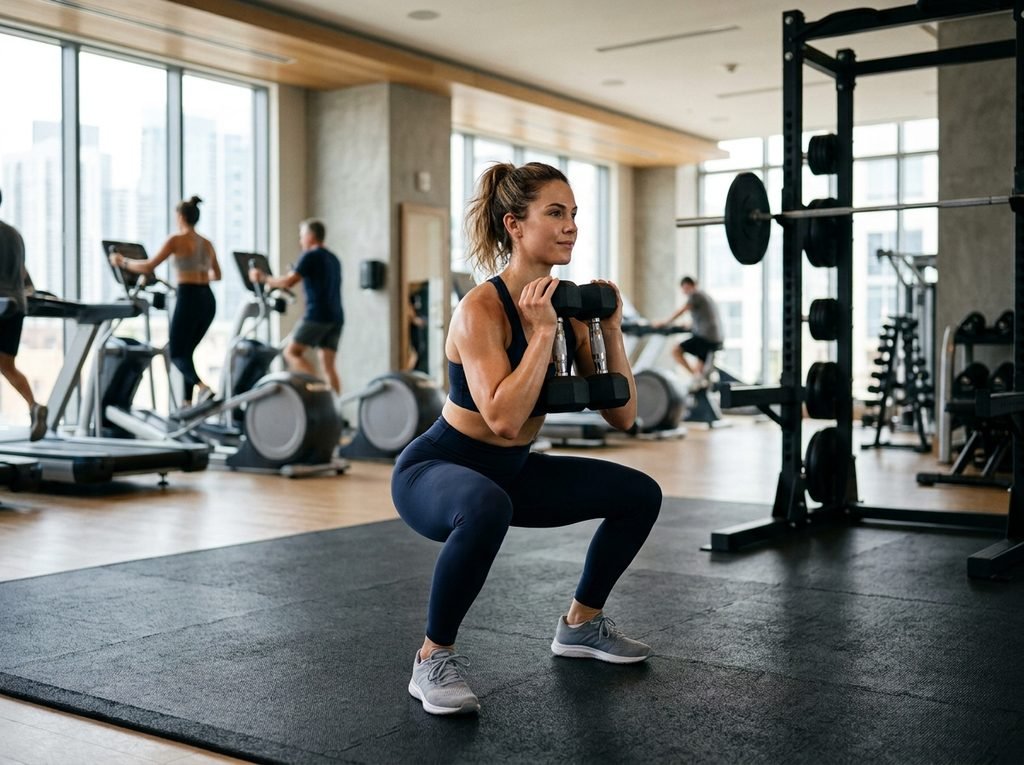
Beginners can start with fundamental movements such as squats, rows, push-ups, lunges, hip hinges, and presses.
Bodyweight Exercises
You don’t need a gym membership to begin strength training.
Bodyweight exercises can provide a useful introduction to resistance training.
Examples include:
- Squats
- Wall push-ups
- Incline push-ups
- Glute bridges
- Reverse lunges
- Step-ups
- Planks
Beginners should select variations that match their current ability and focus on controlled movement.
Resistance Bands
Resistance bands are inexpensive, portable, and versatile.
They can be used for exercises such as rows, presses, squats, lateral movements, and other resistance exercises.
Because bands come in different resistance levels, beginners can start with a manageable level and progress gradually.
They are particularly useful for people who want to exercise at home or while traveling.
Weight Training With Dumbbells
Dumbbells provide another flexible option for strength training.
A pair of adjustable or fixed dumbbells can be used for many exercises, including squats, rows, presses, lunges, carries, and hip-hinge movements.
Start with a resistance that allows you to maintain proper technique throughout your repetitions.
As your strength improves, you can gradually increase resistance.
Running
Running can provide a vigorous cardiovascular workout, but it isn’t necessary for everyone trying to lose weight.
If you’re new to exercise, starting with walking and gradually introducing short jogging intervals may be more appropriate than immediately running long distances.
A beginner might alternate periods of walking and easy jogging according to their current fitness level.
Comfortable footwear and gradual progression are important when increasing running activity.
Interval Training
Interval training involves alternating periods of higher effort with periods of lower-intensity recovery.
Intervals can be performed while walking, cycling, running, rowing, or using other forms of cardio.
For beginners, intervals don’t need to be extremely intense. Even modest changes in pace can create variation in a workout.
As fitness improves, the duration or intensity of the harder intervals can gradually increase.
Stair Climbing
Stair climbing can provide a challenging cardiovascular and lower-body workout.
You can use stairs outdoors, in a building, or a stair-climbing machine at a gym.
Start slowly and use a handrail if needed for balance.
Because stair climbing can be demanding, beginners should increase duration gradually.
Rowing
Rowing can provide both cardiovascular and muscular demands.
A rowing machine allows you to control resistance and pace while working the legs, hips, back, and arms.
Proper technique is important. Beginners should learn the basic rowing sequence before attempting high-intensity sessions.
Low-Impact Cardio
Low-impact activities can be useful for beginners, particularly those who find running uncomfortable.
Examples include cycling, swimming, elliptical training, brisk walking, and certain aerobic classes.
The best choice depends on your preferences, fitness level, available equipment, and any physical limitations.
Why You Don’t Need Extreme Workouts
Many beginners assume that a workout must be exhausting to be effective.
This isn’t necessary.
A moderate workout performed consistently can provide meaningful benefits, while extremely demanding workouts may be difficult to recover from and maintain.
The most useful exercise routine is one that challenges you appropriately without making you dread your next session.
How Often Should Beginners Exercise?
The appropriate amount of exercise varies from person to person.
Beginners can start with manageable amounts of activity and gradually build toward a more consistent routine.
A combination of regular cardiovascular activity and strength training can provide a balanced approach.
If you’re currently inactive, even small increases in movement can be a meaningful first step.
Combine Cardio and Strength Training
You don’t have to choose between cardio and strength training.
Cardiovascular exercise can improve endurance and heart health, while resistance training develops muscular strength and supports physical function.
Combining both forms of exercise creates a more comprehensive fitness routine.
For example, you might perform strength training several times per week while adding walking or cycling on other days.
Start Slowly
One of the biggest mistakes beginners make is doing too much too soon.
After becoming motivated to lose weight, it can be tempting to exercise intensely every day.
However, sudden increases in training volume can increase fatigue and make it harder to maintain consistency.
Start at a level you can realistically manage and increase gradually.
Choose Activities You Enjoy
Enjoyment matters because weight management is a long-term process.
If you hate running, you don’t need to run.
If you prefer cycling, swimming, dancing, hiking, walking, or strength training, choose activities that make you more likely to stay active.
Consistency is much easier when physical activity fits naturally into your lifestyle.
Increase Exercise Gradually
As your fitness improves, you can gradually increase the amount of exercise you perform.
You might walk for a longer duration, increase your cycling distance, add another strength-training session, or slightly increase resistance during your workouts.
Small changes are generally easier to recover from than sudden increases in training volume.
Give your body time to adapt before adding another challenge.
Use the Talk Test
The talk test can be a simple way for beginners to estimate exercise intensity.
During moderate activity, you should generally be able to speak, although you may be breathing more heavily than normal.
During higher-intensity activity, speaking may become more difficult.
This provides a practical alternative to relying entirely on complicated heart-rate calculations, especially when you’re just beginning.
Don’t Rely Only on Exercise Calories
Fitness trackers and exercise machines may display estimates of calories burned, but these numbers are not perfectly accurate.
It is therefore better to view exercise as part of your overall health routine rather than trying to “earn” specific foods with workouts.
Nutrition and physical activity should work together rather than becoming a cycle of eating and exercising to compensate for one another.
Daily Movement Outside the Gym
Your formal workout isn’t the only physical activity that matters.
Daily movement can make a meaningful contribution to your overall activity level.
Consider taking short walking breaks during the day, standing up regularly, doing household tasks, walking while talking on the phone, or choosing stairs when appropriate.
These small activities can help reduce the amount of time you spend sitting.
Build a Weekly Exercise Routine
A beginner-friendly routine doesn’t need to be complicated.
For example, you could combine several days of walking with a few strength-training sessions.
An example week might look like this:
- Monday: Full-body strength training
- Tuesday: Brisk walking
- Wednesday: Light activity or rest
- Thursday: Full-body strength training
- Friday: Brisk walking or cycling
- Saturday: Optional recreational activity
- Sunday: Rest or gentle movement
This is only an example. Your schedule should be adjusted according to your fitness level, preferences, recovery, and available time.
Exercise at Home
You don’t need expensive equipment to become more active.
A home workout can include bodyweight squats, incline push-ups, lunges, glute bridges, planks, and other movements.
Adding resistance bands or a pair of dumbbells can provide more options as you become stronger.
A simple home routine can be just as useful for building consistency as a complicated gym program.
Exercise Outdoors
Outdoor activities can make exercise more enjoyable for many people.
Walking, hiking, cycling, jogging, recreational sports, and other outdoor activities can provide cardiovascular exercise while giving you a change of environment.
If you enjoy being outdoors, using outdoor activity as part of your weight-management routine may make it easier to stay consistent.

Group Activities
Some people find exercise more enjoyable when they are around others.
Group fitness classes, sports teams, walking groups, cycling groups, and workout partners can provide social motivation.
Having a scheduled activity can also make it easier to treat exercise as a regular commitment rather than something you do only when you feel motivated.
Don’t Ignore Recovery
Exercise creates a physical demand on the body, so recovery is an important part of a training routine.
Allow enough time between demanding workouts and pay attention to how your body responds.
Sleep, adequate nutrition, hydration, and rest days can all contribute to recovery.
If you are constantly exhausted or your performance is declining, your training routine may need adjustment.
Warm Up Before Exercise
A short warm-up can help prepare your body for activity.
Start with several minutes of easy movement, followed by exercises or movements related to the activity you’re about to perform.
For strength training, lighter sets can help you prepare for heavier working sets.
A warm-up should prepare you for exercise rather than leave you fatigued before the main workout.
Cool Down After Exercise
A cool-down can provide a gradual transition from exercise to normal activity.
You can walk slowly for a few minutes after a cardio session or perform gentle movements after strength training.
There is no requirement to perform an elaborate cool-down routine, but gradually reducing your activity can feel comfortable after demanding exercise.
Common Exercise Mistakes During Weight Loss
Doing Too Much Too Soon
Rapidly increasing exercise volume can lead to excessive fatigue and make consistency difficult.
Only Doing Cardio
Cardiovascular exercise is valuable, but resistance training can also play an important role in maintaining strength and muscle.
Ignoring Technique
Performing an exercise incorrectly simply to complete more repetitions can reduce its effectiveness and increase the risk of injury.
Training Through Significant Pain
Muscular effort and normal fatigue are different from sharp or severe pain. Unusual pain should not be ignored.
Expecting Exercise Alone to Solve Weight Gain
Exercise can support weight management, but food intake, sleep, stress, medications, and other factors also influence body weight.
How to Stay Motivated
Motivation naturally changes from day to day.
Instead of depending entirely on motivation, create routines that make exercise easier to perform.
Schedule workouts at convenient times, prepare your clothes in advance, keep basic equipment accessible, and choose activities you genuinely enjoy.
Tracking workouts can also help you see improvements that may not be visible on the scale.
Track More Than Body Weight
Weight is only one possible measure of progress.
You can also monitor how long you can walk, how much resistance you can lift, how many repetitions you can perform, or how your cardiovascular endurance changes.
Improved fitness and strength are valuable outcomes even when body weight changes slowly.
Frequently Asked Questions
What is the best exercise for weight loss?
There is no single best exercise for everyone. Walking, cycling, swimming, running, strength training, and other activities can all contribute to a healthy weight-management routine.
Is cardio or strength training better for weight loss?
Both can be useful. Cardio supports cardiovascular fitness and increases activity, while strength training helps develop and maintain muscular strength. Combining both can provide a balanced approach.
Can walking help with weight loss?
Yes. Walking increases physical activity and can contribute to energy expenditure. The amount needed varies depending on the individual and their overall eating and activity patterns.
How often should beginners exercise?
Beginners should start with manageable activity and gradually increase frequency and duration. A combination of regular aerobic activity and strength training can support overall fitness.
Do I need a gym to lose weight?
No. Walking, bodyweight exercises, resistance bands, cycling, outdoor activities, and home workouts can all contribute to an active lifestyle.
Can I lose weight by exercising without changing my diet?
Exercise can increase energy expenditure, but weight management is influenced by overall energy intake and expenditure. Combining physical activity with a balanced eating pattern may be more effective for many people.
How long should a beginner workout?
The ideal workout duration depends on your fitness level and the type of exercise. Beginners should focus on manageable sessions that can be performed consistently rather than trying to exercise for as long as possible.
Should I exercise every day to lose weight?
You don’t necessarily need intense exercise every day. Regular movement is beneficial, but demanding workouts should be balanced with appropriate recovery.
Final Thoughts
The best exercises for weight loss are not necessarily the most extreme or exhausting ones. The most useful activities are those that you can perform safely, enjoy, and maintain consistently.
Walking is an excellent starting point for many beginners. As your fitness improves, you can add cycling, swimming, jogging, interval training, or other cardiovascular activities.
Strength training should also have a place in a balanced fitness routine. Bodyweight exercises, resistance bands, dumbbells, and gym machines can all help develop muscular strength.
Start gradually and give your body enough time to adapt. Avoid the temptation to exercise intensely every day simply because you want faster results.
Remember that weight loss is influenced by more than exercise. Nutrition, sleep, stress, medications, genetics, and daily habits can all affect your results.
Instead of focusing exclusively on the scale, look for improvements in strength, endurance, energy, mobility, and consistency.
If you’re new to exercise or have a medical condition, injury, significant physical limitation, or other health concern, consider speaking with a qualified healthcare professional before beginning a new exercise program.
A sustainable routine built around activities you enjoy is far more valuable than a short-term workout plan that you cannot maintain.
Beginner Weight-Loss Exercise Checklist
- Start with manageable activity.
- Walk regularly if walking is comfortable for you.
- Add strength training gradually.
- Include cardiovascular activity you enjoy.
- Increase intensity and duration slowly.
- Focus on proper exercise technique.
- Warm up before demanding workouts.
- Allow adequate recovery.
- Stay hydrated.
- Prioritize adequate sleep.
- Track fitness improvements, not just body weight.
- Avoid extreme exercise routines.
- Choose activities you can maintain long term.