Strength Training for Beginners: How to Start Safely and Build Confidence
Strength training can seem intimidating when you’re new to fitness. You may imagine crowded gyms, heavy weights, complicated machines, or experienced people performing exercises that look impossible. But strength training doesn’t have to start that way.
For beginners, strength training can be as simple as learning how to squat, push, pull, bend, and move your body with control. You don’t need to lift extremely heavy weights or spend hours in the gym to begin building a stronger foundation.
A well-planned beginner strength routine can help you become more comfortable with exercise, improve your ability to perform everyday movements, and gradually develop muscular strength and endurance. The key is to start at an appropriate level and increase the challenge slowly.
This guide explains what strength training is, why beginners can benefit from it, how to choose exercises, how often to train, and how to progress without making your workouts unnecessarily complicated.
What Is Strength Training?
Strength training is a form of exercise that challenges your muscles against some type of resistance.
That resistance can come from your own bodyweight, resistance bands, dumbbells, machines, or other equipment.
When your muscles repeatedly work against resistance, your body adapts to the training stimulus. Over time, appropriate strength training can help you become stronger and more capable of handling physical tasks.
For beginners, bodyweight exercises can provide an excellent starting point because they allow you to learn basic movement patterns before introducing additional resistance.
Why Should Beginners Consider Strength Training?
Strength training isn’t only for athletes or people who want to build large muscles. It can be useful for many adults who simply want to become stronger and more physically capable.
Regular strength-focused exercise can help you practice movements that resemble activities you perform in everyday life. Squatting, pushing, pulling, carrying, and getting up from the floor are all examples of movements that involve muscular strength.
Strength training can also complement other forms of exercise. Someone who enjoys walking, cycling, swimming, or recreational sports may use strength exercises to develop a more balanced fitness routine.
For beginners, one of the biggest benefits may simply be increased confidence. As exercises that once felt difficult become more manageable, you can begin to feel more comfortable using your body.
Do You Need a Gym to Start Strength Training?
No. A gym can provide access to a wide variety of equipment, but it isn’t required for beginning strength training.
Many basic exercises can be performed at home using your bodyweight. A sturdy chair, wall, or other appropriate household setup may also provide useful options when used safely.
As you gain experience, you can decide whether additional equipment would make your workouts more convenient or enjoyable.
The important thing is not how much equipment you own. The important thing is learning how to exercise consistently and appropriately for your current fitness level.
Start With Basic Movement Patterns
A simple way to organize beginner strength training is to think about basic movement patterns rather than individual muscles.
These patterns can include:
- Squatting
- Hinging at the hips
- Pushing
- Pulling
- Lunging
- Carrying
- Core stabilization
You don’t need to master every movement immediately. Start with a few basic exercises and focus on learning how to perform them comfortably and with control.
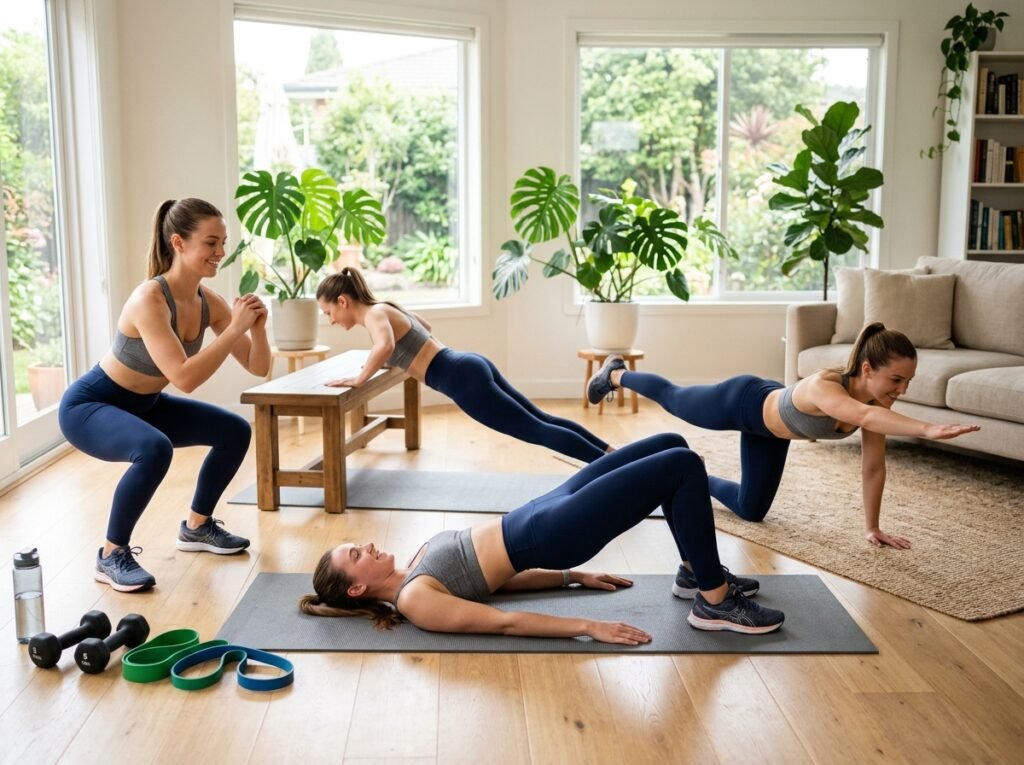
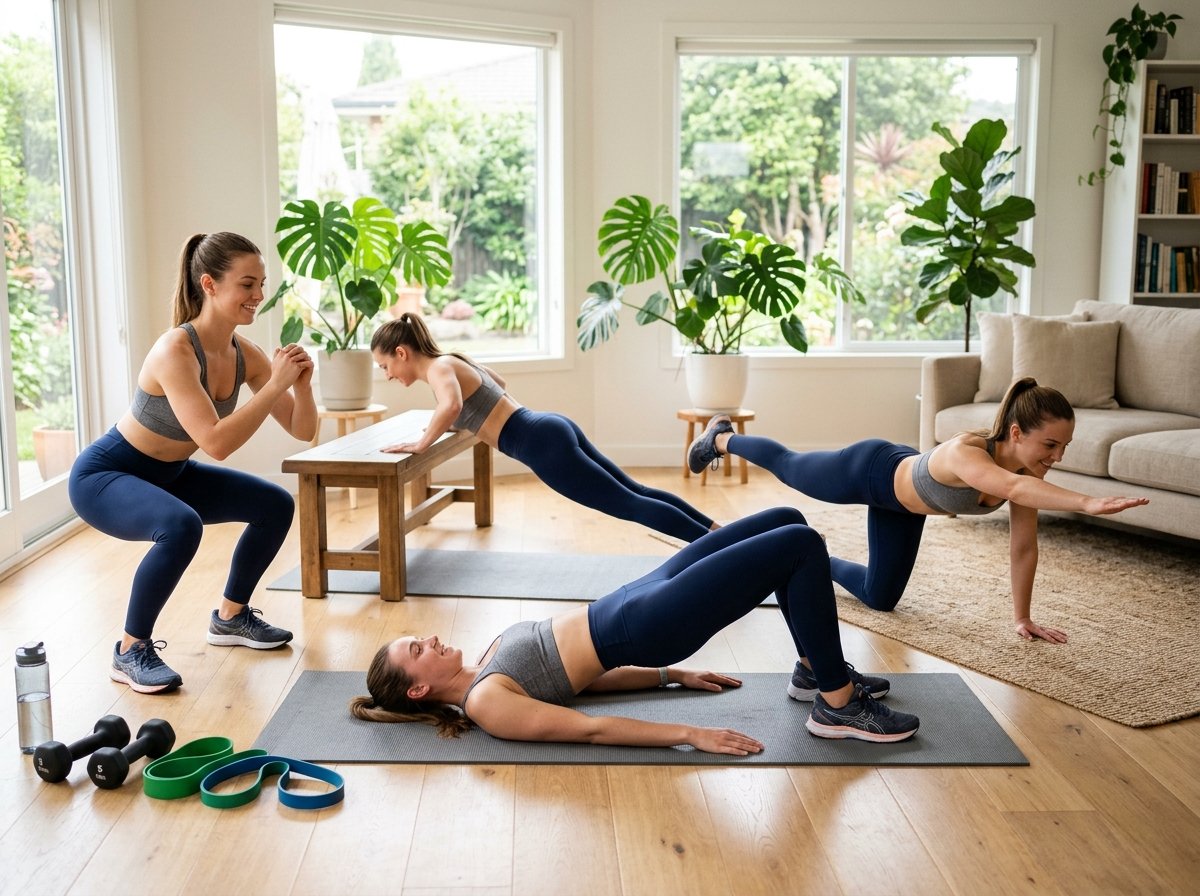
1. Bodyweight Squat
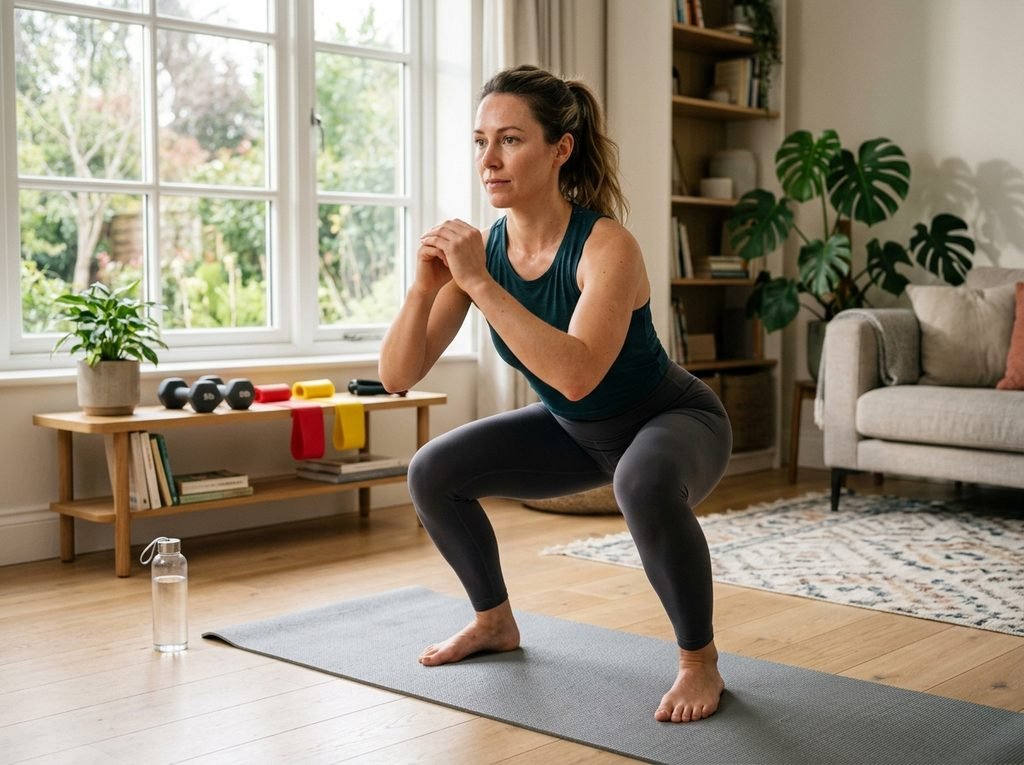
The bodyweight squat is one of the most useful exercises for beginners.
Stand with your feet comfortably apart. Keep your chest in a natural position and begin moving your hips backward while bending your knees.
Lower yourself only as far as you can comfortably control. Then press through your feet and return to standing.
Think about moving smoothly rather than trying to reach a specific depth.
If a regular squat feels difficult, you can practice sitting down toward a sturdy chair and standing back up. This can provide a familiar movement pattern while helping you develop control.
2. Wall Push-Up
Push-ups are a classic strength exercise, but a traditional floor push-up can be challenging for beginners.
A wall push-up provides an easier variation.
Stand facing a sturdy wall and place your hands around chest height. Step your feet backward slightly and create a comfortable body angle.
Bend your elbows and bring your upper body toward the wall. Then push through your hands to return to the starting position.
Keep your movements controlled and avoid rushing through repetitions.
3. Glute Bridge
The glute bridge is a simple floor-based exercise that trains the muscles around your hips and backside.
Lie comfortably on your back with your knees bent and feet resting on the floor.
Press your feet into the floor and gently raise your hips. Pause briefly if comfortable, then lower them in a controlled manner.
Focus on smooth movement rather than lifting your hips as high as possible.
4. Reverse Lunge
Reverse lunges can help beginners practice single-leg movement while developing strength and balance.
Begin standing upright. Step one foot backward and lower your body in a controlled manner.
Push through the front foot to return to your starting position, then repeat on the opposite side.
If balance is difficult, perform the exercise beside a sturdy surface that can provide light support.
5. Bird Dog
The bird dog combines movement with balance and stability.
Begin on your hands and knees with your hands underneath your shoulders and knees positioned underneath your hips.
Slowly extend one arm forward and the opposite leg backward. Keep your torso as stable as possible before returning to the starting position.
Repeat on the other side.
Move slowly. The goal is controlled coordination rather than speed.
How Many Exercises Should a Beginner Do?
You don’t need a long list of exercises to have a useful beginner workout.
A session containing four to six well-chosen movements may be enough to get started. You can select exercises that cover different movement patterns and major areas of the body.
For example, a beginner session could include squats, wall push-ups, glute bridges, reverse lunges, bird dogs, and a simple pulling exercise when appropriate equipment is available.
Start with manageable repetitions and focus on technique.
How Many Sets and Repetitions Should You Do?
There is no single number that works for every beginner.
A practical starting point is often one or two sets of an exercise with a manageable number of repetitions. The exact number depends on the exercise and your current ability.
The repetitions should allow you to maintain control. You don’t need to continue until your technique completely breaks down.
As you become more comfortable, you can gradually increase repetitions or add another set.
Why Technique Matters More Than Heavy Weight
One of the most common mistakes beginners make is focusing too much on how much weight they can lift.
Strength training is not a competition against the person next to you.
Using excessive resistance before you understand the movement can make it harder to maintain good technique and may increase unnecessary strain.
Start with a resistance level that allows you to perform the movement with control. Once the exercise becomes comfortable, you can gradually increase the challenge.
How Often Should Beginners Strength Train?
Many beginners can start with two or three strength-training sessions per week.
Spacing workouts across the week can provide time for recovery between sessions.
For example, you might train on Monday and Thursday. If you later add a third session, you could choose Saturday or another day that fits your schedule.
You don’t need to train every day to make progress.
Consistency, appropriate progression, and recovery are more important than trying to maximize the number of workout days.
How to Progress With Strength Training
One of the most important principles of strength training is progressive overload. In simple terms, this means gradually increasing the challenge placed on your muscles as your body becomes more accustomed to an exercise.
Progressive overload doesn’t mean you have to dramatically increase the weight every week. For beginners, progress can happen in several different ways.
- Performing a few additional repetitions.
- Adding another set.
- Using slightly more resistance.
- Choosing a more challenging exercise variation.
- Improving your movement control.
- Increasing the range of motion when appropriate.
- Reducing unnecessary rest while maintaining good technique.
For example, you might begin with wall push-ups. Once they become comfortable, you could move to incline push-ups using a stable elevated surface. Eventually, you may be able to work toward a standard push-up.
This gradual approach allows your body time to adapt instead of forcing you into exercises that are currently beyond your ability.
When Should You Increase the Difficulty?
You don’t need to make every workout harder than the previous one.
If an exercise still feels challenging, focus on becoming more comfortable with the movement. Once you can consistently perform the exercise with good control and the current workload feels relatively easy, you may consider making a small adjustment.
Progress should be gradual. Increasing several variables at the same time can make it difficult to understand how your body is responding.
For example, if you add weight, increase repetitions, and add several new exercises during the same week, the overall training demand may increase more than you intended.
Instead, make one small change and give yourself time to adapt.
Should Beginners Lift Heavy Weights?
Heavy weights are not necessary for someone who is just beginning strength training.
The appropriate resistance depends on your experience, exercise selection, goals, and individual circumstances.
Beginners can often develop a useful foundation with bodyweight exercises or relatively light resistance while learning proper movement patterns.
As you become more experienced, you may gradually introduce additional resistance. The goal should be controlled and purposeful training rather than simply trying to lift the heaviest weight possible.
What About Dumbbells?
Dumbbells can be useful because they provide many exercise options in a relatively small amount of space.
Once you’re comfortable with basic bodyweight movements, dumbbells can be incorporated into exercises such as rows, presses, squats, and other movements.
If you use dumbbells, choose a resistance that allows you to maintain control throughout the exercise.
You should also make sure that you have enough space to exercise safely and that you understand the movement before increasing resistance.
Resistance Bands for Beginners
Resistance bands are another option for people who want to add resistance without purchasing a large collection of weights.
They are lightweight, portable, and can be used for a variety of movements.
However, bands still need to be used carefully. Check them for signs of damage and make sure they are securely positioned before performing an exercise.
As with any resistance exercise, focus on controlled movement rather than trying to create maximum tension immediately.
Why Recovery Matters
Strength training challenges your body, which means recovery is an important part of your routine.
After a demanding workout, your muscles and other systems involved in exercise need time to recover.
This is one reason beginners generally don’t need to perform intense strength workouts every day.
Allowing adequate recovery can help you return to your next session feeling prepared rather than constantly exhausted.
Recovery also involves more than simply taking days off. Sleep, nutrition, hydration, and overall stress levels can all influence how you feel during exercise.
What Should You Do on Rest Days?
A rest day doesn’t necessarily mean complete inactivity.
If you feel comfortable, you can take an easy walk, perform gentle mobility movements, or continue with normal daily activities.
The purpose is simply to avoid turning every day into a demanding training session.
If your body feels particularly tired or you are dealing with unusual soreness or discomfort, taking additional recovery time may be appropriate.
Common Strength Training Mistakes Beginners Should Avoid
1. Trying to Lift Too Much
Choosing a weight simply because it looks impressive can interfere with proper technique. Start with a manageable resistance and focus on learning the movement.
2. Moving Too Quickly
Fast repetitions can make it harder to maintain control. Unless an exercise specifically requires speed, beginners should generally focus on smooth and deliberate movement.
3. Ignoring Pain
Muscle effort and fatigue can be normal parts of exercise, but sharp, severe, or unusual pain should not simply be ignored.
If an exercise causes concerning symptoms, stop and seek appropriate professional advice when necessary.
4. Changing Exercises Every Workout
Beginners can benefit from repeating basic movements. Familiarity allows you to improve technique and recognize progress.
5. Comparing Yourself With Experienced Lifters
Someone who has trained for years will naturally be able to lift more or perform more advanced exercises than a beginner.
Your starting point is not supposed to look like someone else’s years of progress.
6. Skipping Warm-Ups
A short period of easy movement before training can help you transition into your workout. It doesn’t need to be complicated.
A Simple Beginner Strength Workout
If you want a straightforward routine, you can build a session around several basic movements.
- Bodyweight squats: 8–12 repetitions
- Wall or incline push-ups: 8–12 repetitions
- Glute bridges: 10–15 repetitions
- Reverse lunges: 6–10 repetitions per side
- Bird dogs: 6–10 repetitions per side
- Optional resistance exercise: 8–12 controlled repetitions
Start with one set if you’re new to exercise. If that feels manageable and you recover well, you can gradually build toward additional sets.
Rest between exercises whenever necessary.
How Long Should a Beginner Strength Workout Last?
There is no required workout duration.
A beginner session might take around 20 to 30 minutes, including a short warm-up and cool-down. Another person may need less time, while someone else may prefer a longer session.
Don’t assume that a longer workout is automatically better.
The quality of your movement, consistency, recovery, and ability to gradually progress are more important than simply spending as much time as possible exercising.
Can Strength Training Help With Everyday Activities?
One practical benefit of becoming stronger is that everyday physical tasks may feel more manageable.
Activities such as carrying groceries, climbing stairs, getting up from a chair, lifting household objects, or playing recreational sports all involve physical strength and coordination.
Strength training can provide an opportunity to practice some of the fundamental movements involved in these activities.
However, your workout should still be appropriate for your current fitness level rather than being designed around proving how much you can lift.
How to Stay Consistent
Consistency is often more challenging than knowing which exercises to perform.
A good strategy is to make your workout schedule realistic. Choose days and times when you’re most likely to have enough energy and time to exercise.
You can also prepare your workout space ahead of time. Keeping an exercise mat, resistance bands, or other equipment easily accessible may reduce the amount of effort required to begin.
Another useful approach is to set a minimum goal.
Instead of telling yourself that every workout must be perfect, commit to completing a short session. Once you begin, you may decide to continue longer, but even a shorter session can help maintain the habit.
How to Measure Your Progress
Strength progress isn’t limited to the amount of weight you can lift.
You can track several other improvements:
- You can perform more repetitions.
- Your technique feels more controlled.
- An exercise feels easier than before.
- You can use a slightly higher resistance.
- You recover more comfortably between sessions.
- Your balance and coordination improve.
- You feel more confident during workouts.
Keeping a simple workout log can help you notice these changes over time.
Frequently Asked Questions
Can complete beginners do strength training?
Yes. Beginners can start with simple bodyweight movements and gradually introduce resistance as they become more comfortable.
How many days a week should beginners strength train?
Two or three structured sessions per week can be a practical starting point for many beginners, provided the routine is appropriate for their fitness level and recovery needs.
Do I need weights to build strength?
No. Bodyweight exercises can provide resistance and help beginners develop a foundation. Additional weights or resistance tools can be introduced later if appropriate.
Should I train the same muscles every day?
Beginners generally benefit from allowing adequate recovery between demanding strength sessions rather than repeatedly training the same muscles intensely every day.
How quickly will I get stronger?
Progress varies from person to person. Factors such as training consistency, exercise selection, recovery, nutrition, age, and previous experience can influence how quickly you improve.
Is muscle soreness necessary for progress?
No. You don’t need to be extremely sore after a workout for the session to be useful. Focus on gradual progress and consistent training rather than trying to maximize soreness.
What should I do if an exercise hurts?
Stop the exercise if you experience significant or unusual pain. Consider adjusting the movement or seeking advice from an appropriately qualified professional, particularly if pain persists.
Final Thoughts
Strength training doesn’t have to be intimidating, complicated, or reserved for experienced gym-goers. Beginners can start with simple movements, bodyweight exercises, and manageable resistance while learning how to control their bodies during exercise.
The most important principles are simple: start at an appropriate level, focus on technique, train consistently, allow enough recovery, and increase the challenge gradually.
You don’t need to lift extremely heavy weights to begin building a stronger foundation. You also don’t need a complicated workout split or expensive equipment.
Start with movements you can perform safely and comfortably. As your confidence and ability improve, gradually introduce more challenging variations or additional resistance.
Remember that strength training is a long-term process. The goal isn’t to become as strong as possible in a few weeks. The goal is to build a sustainable habit that allows you to become stronger and more capable over time.
Start where you are, respect your current limits, and give yourself time to progress. With consistency and patience, even simple beginner exercises can become the foundation of a much stronger fitness routine.
Beginner Strength Training Checklist
- Start with simple movements.
- Learn proper exercise technique.
- Use manageable resistance.
- Begin with two or three sessions per week.
- Allow recovery between challenging workouts.
- Increase difficulty gradually.
- Track your progress.
- Don’t compare your starting point with someone else’s experience.
- Stop if you experience concerning symptoms.
- Focus on consistency rather than perfection.