How Often Should You Work Out? A Beginner’s Guide to Building a Routine
One of the first questions people ask when they decide to get serious about fitness is surprisingly simple: How often should I work out?
It sounds like there should be one perfect answer. Maybe three days a week is enough. Maybe you need to exercise every day. Maybe you should spend an hour at the gym every morning. The truth is that there isn’t one schedule that works perfectly for everyone.
The right workout frequency depends on your current fitness level, the type of exercise you’re doing, how well you recover, your schedule, and what you are trying to accomplish. Someone who is completely new to exercise may need a very different routine from an experienced athlete.
For beginners, the most important goal usually isn’t doing as much exercise as possible. It’s creating a routine that is realistic enough to continue. A workout plan that fits naturally into your life is far more useful than an ambitious schedule that becomes impossible to maintain after a couple of weeks.
This guide explains how often beginners can consider exercising, how to organize different types of workouts, why rest days matter, and how to gradually build a routine without making fitness feel like another stressful responsibility.
There Is No Perfect Workout Schedule for Everyone
It’s easy to believe that fitness requires following a strict calendar. You might see someone online exercising six days a week and assume that you need to do the same thing to make progress.
That’s not necessarily true.
Your ideal schedule should take your starting point and lifestyle into account. If you currently don’t exercise, suddenly trying to train every day can leave you exhausted and make the entire process feel unpleasant.
On the other hand, someone who already has a strong fitness base may comfortably handle a much higher training frequency.
Instead of asking, “What is the maximum amount of exercise I can do?” a better question is, “What amount of exercise can I consistently recover from and continue doing?”
How Often Should Beginners Work Out?
For many beginners, starting with around two to three structured workouts per week can be a practical approach.
This gives you enough opportunities to practice movement and build consistency while leaving recovery days between sessions.
Your workouts don’t have to be extremely long. A focused session can be useful even if it doesn’t take an hour.
For example, you might exercise on Monday, Wednesday, and Saturday. On the days between workouts, you can stay active through walking or other comfortable daily activities without doing another demanding training session.
The exact schedule can be adjusted according to your life. If three days are difficult because of work, school, family responsibilities, or other commitments, two consistent workouts may be a better starting point.
Why Starting Slowly Can Be a Good Idea
When motivation is high, it’s tempting to go all in. You may decide that you’re going to completely change your lifestyle overnight, exercise every day, follow a strict diet, and never miss a workout.
That enthusiasm can be useful, but your body still needs time to adapt.
Exercise places stress on your muscles, joints, cardiovascular system, and nervous system. Gradually increasing your activity gives your body an opportunity to become accustomed to that stress.
Starting slowly also helps you learn what your body can handle.
You may discover that you recover quickly from certain workouts but need more time after others. You may find that morning workouts work better for you than evening sessions, or that shorter workouts are easier to maintain than long ones.
These observations are valuable because they help you build a routine around your actual life rather than an imaginary perfect schedule.
What Counts as a Workout?
A workout doesn’t have to mean spending an hour in a gym.
Depending on your goals, a workout might include strength exercises, cardiovascular activity, mobility work, or a combination of different movements.
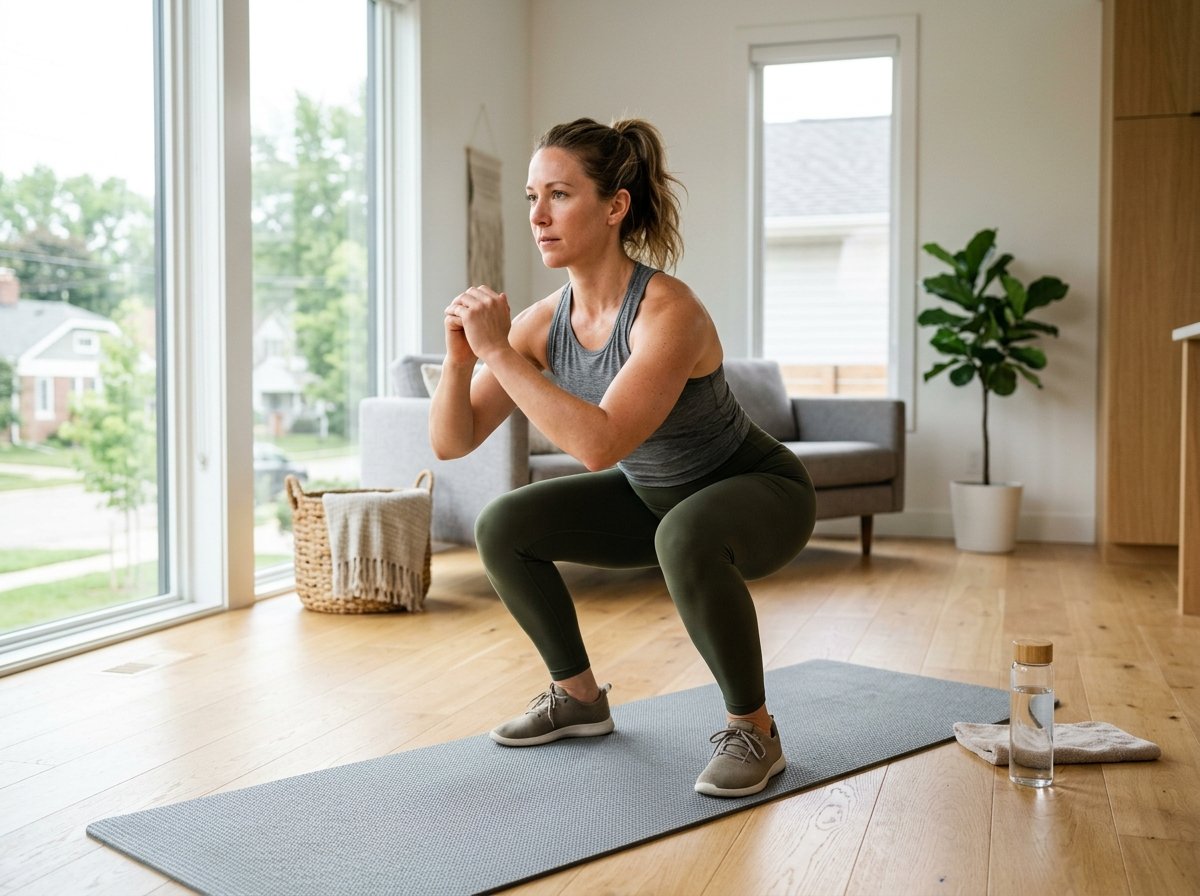
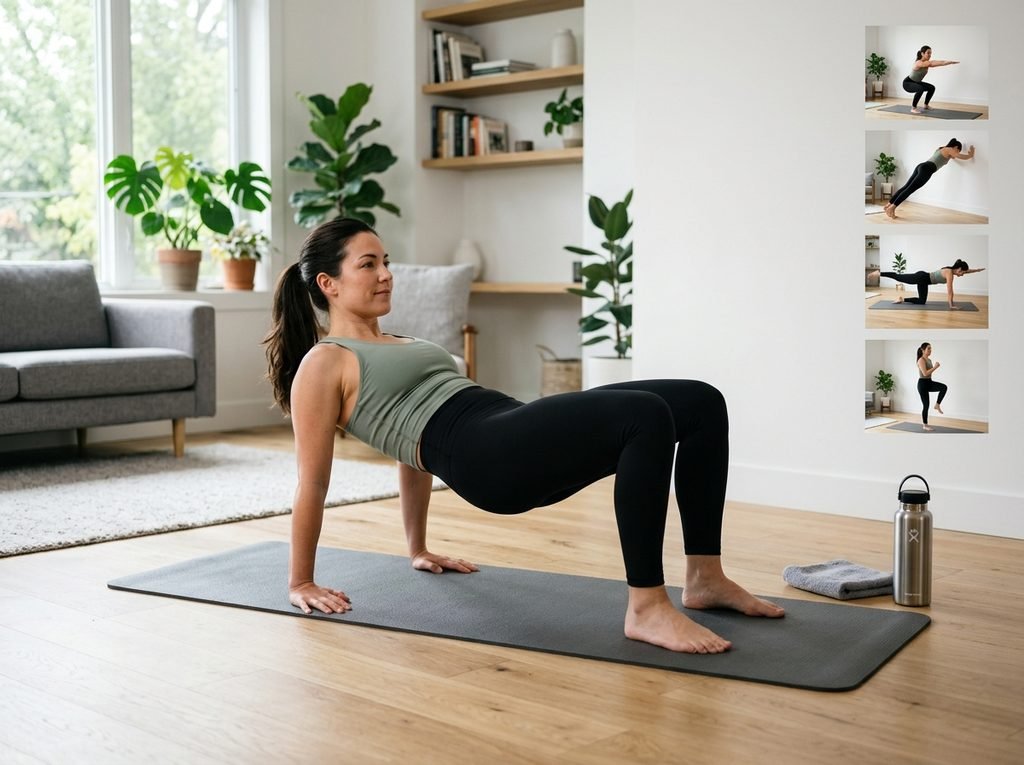
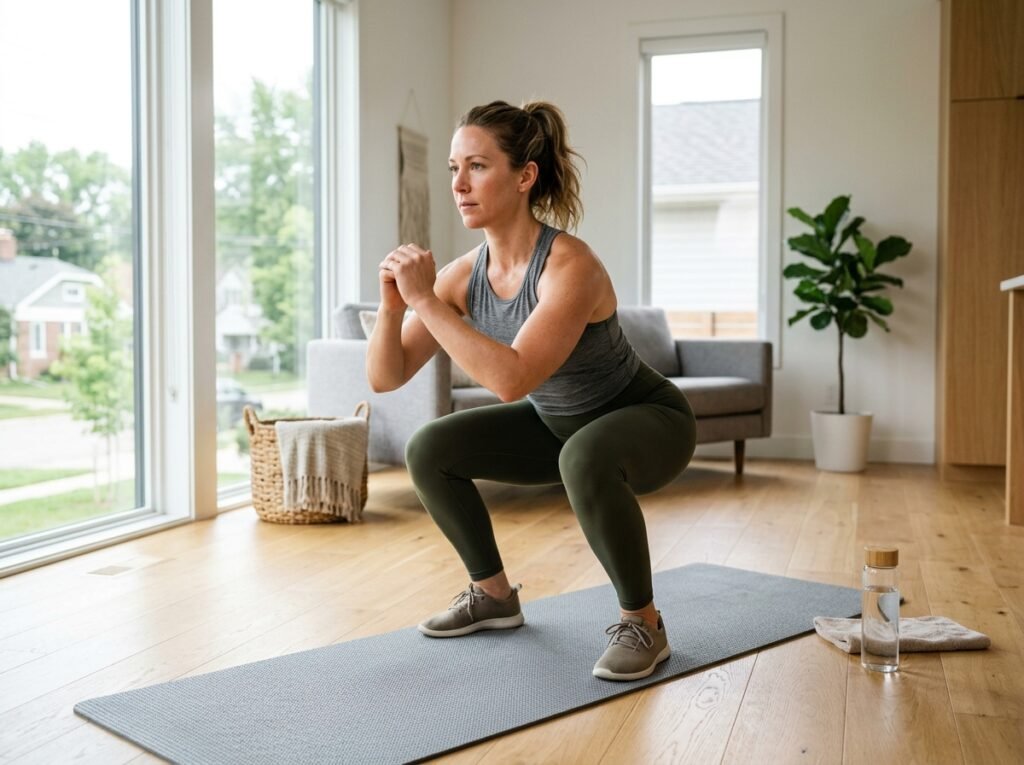
A beginner session could involve bodyweight squats, push-up variations, glute bridges, lunges, and other simple movements.
Another day might involve a brisk walk or another form of comfortable cardiovascular activity.
The important thing is understanding the difference between structured exercise and general daily movement. Both can contribute to an active lifestyle, but they don’t necessarily need to be treated as identical workouts.
Strength Training Frequency for Beginners
Strength training can be an excellent foundation for a beginner fitness routine because it allows you to gradually develop strength and become more comfortable with basic movements.
Beginners can often start with full-body strength sessions a few times per week rather than trying to train individual muscle groups every day.
A full-body workout might include a squat movement, a pushing movement, a pulling movement, a hip-focused movement, and some core work.
The advantage of this approach is simplicity. You don’t need to remember a complicated schedule that assigns a different body part to every day.
As you become more experienced, you may eventually prefer a more specialized training structure, but there’s no need to start there.
Cardio: How Often Should You Do It?
Cardiovascular exercise can include activities such as walking, cycling, swimming, jogging, dancing, or other activities that raise your heart rate.
If you’re new to cardio, you don’t necessarily need to start with intense sessions.
A comfortable walk can be a very approachable way to become more active. Over time, you can adjust the pace, duration, or type of activity according to your fitness level and goals.
One useful strategy is to think beyond the traditional idea of a “cardio workout.” Walking to nearby places, taking the stairs when appropriate, playing an active game, or spending more time moving throughout the day can all contribute to a more active lifestyle.
Do You Need to Work Out Every Day?
No. Exercising every day is not automatically better.
Your body needs recovery, particularly after challenging workouts.
That doesn’t mean you need to spend every non-workout day sitting on the couch. You can have active recovery days where you take an easy walk, perform gentle mobility exercises, or simply go about your normal daily activities.
The key is avoiding the idea that every day has to be a hard training day.
The Importance of Rest Days
Rest days are sometimes misunderstood.
Some people feel guilty when they take a day away from exercise, as though resting means they’re losing progress. In reality, recovery is an important part of a sustainable training routine.
After exercise, your body needs time to recover from the physical demands of training.
If you continually increase exercise without allowing adequate recovery, you may feel unusually tired, experience persistent soreness, or simply begin to lose motivation.
Rest doesn’t mean you’re being lazy. It means you’re giving your body an opportunity to recover so that you can return to your next workout ready to move.
How to Know When You Need More Recovery
Everyone responds to exercise differently, so learning to pay attention to your body is important.
If you notice that you’re consistently exhausted, your performance is declining, normal activities feel unusually difficult, or you’re struggling to recover between workouts, it may be worth reducing your training load and allowing more recovery.
Persistent or unusual pain should not simply be treated as a normal part of exercise. If you are concerned about pain or other symptoms, consider seeking advice from an appropriately qualified healthcare professional.
A Simple Weekly Workout Schedule for Beginners
A basic weekly schedule can make getting started much easier.
For example:
- Monday: Full-body strength workout
- Tuesday: Easy walking or normal daily activity
- Wednesday: Full-body strength workout
- Thursday: Recovery or comfortable walking
- Friday: Rest
- Saturday: Full-body workout or enjoyable cardio
- Sunday: Rest or gentle activity
This is only an example, not a requirement. You can move the days around to fit your schedule.
If three structured workouts are too much at first, start with two. Once that feels normal, you can decide whether adding another session makes sense.
How to Balance Strength Training and Cardio
Beginners sometimes feel that they need to choose between strength training and cardio. In reality, both can have a useful place in a balanced fitness routine.
Strength training focuses on challenging your muscles through movements such as squats, push-ups, rows, presses, and other resistance exercises. Cardio focuses more on activities that challenge your cardiovascular system, such as walking, cycling, swimming, jogging, or dancing.
You don’t necessarily need separate workouts for every fitness goal. A simple weekly schedule can combine both types of activity without becoming overwhelming.
For example, you might perform two full-body strength workouts during the week and use other days for walking or another enjoyable cardiovascular activity.
The best combination depends on your goals, fitness level, available time, and ability to recover.
What If You Only Have 20 or 30 Minutes?
Limited time doesn’t mean you can’t exercise effectively.
One of the biggest advantages of a consistent fitness routine is that it can be adapted to your schedule. If you only have 20 minutes available, use those 20 minutes rather than waiting for a day when you have an uninterrupted hour.
A short workout could include a warm-up followed by several basic full-body exercises. You could also use your available time for a brisk walk or another form of activity you enjoy.
Over time, several short sessions can add up to a meaningful amount of physical activity.
Should You Work Out in the Morning or Evening?
There is no universal time of day that makes exercise effective for everyone.
Some people enjoy exercising early because it allows them to complete their workout before other responsibilities take over. Others feel stronger or more energetic later in the day.
Instead of worrying about the “perfect” workout time, choose a period when you are most likely to exercise consistently.
If you repeatedly schedule workouts at a time when you are busy, tired, or distracted, changing the time may make your routine easier to maintain.
What Happens If You Miss a Workout?
Missing one workout does not ruin your progress.
Life is unpredictable. Work, family responsibilities, travel, illness, social commitments, and unexpected events can all interfere with your schedule.
The mistake is not missing a single workout. The bigger problem is allowing one missed session to convince you that your entire routine has failed.
If you miss Monday’s workout, simply return to your routine when you can. You don’t necessarily need to perform two workouts the next day to compensate.
Consistency should be measured over weeks and months, not by whether you completed every single planned session.
How to Build a Routine You Can Actually Maintain
A sustainable workout routine should fit into your real life.
Before creating your schedule, think about how much time you realistically have. Consider your work or school schedule, family responsibilities, sleep habits, commute, and other regular commitments.
Then choose workout days that are genuinely realistic.
For example, if you know that Wednesday evenings are usually busy, don’t build your entire fitness plan around exercising every Wednesday evening. Choose a time when you’re more likely to follow through.
It can also help to keep your first few weeks simple. Once exercising becomes a normal part of your routine, you can gradually add complexity.
Use Gradual Progression
As your fitness improves, your body adapts to the demands you place on it. This means that the same workout may eventually become easier.
When that happens, you can gradually increase the challenge.
Depending on the exercise, progression could mean:
- Performing a few additional repetitions.
- Adding another set.
- Increasing workout duration.
- Using slightly more resistance.
- Choosing a more challenging exercise variation.
- Improving movement control.
You don’t need to change everything at once. Small adjustments can make your workouts progressively more challenging while keeping the routine manageable.
Don’t Ignore Sleep and Recovery
Workout frequency isn’t the only factor that affects your progress.
Recovery also depends on things such as sleep, nutrition, hydration, stress, and general lifestyle habits.
If you consistently sleep poorly or feel highly stressed, you may find that demanding workouts feel harder than usual.
Building a fitness routine therefore involves more than simply counting workout days. Your overall lifestyle influences how well you can exercise and recover.
How Long Should You Follow the Same Routine?
You don’t have to change your workout every week.
Beginners can benefit from repeating basic movements because repetition provides an opportunity to learn technique and become more comfortable with exercise.
Constantly changing exercises can make it difficult to know whether you’re actually progressing.
Once a routine becomes comfortable and you have developed a foundation, you can gradually introduce new exercises, variations, or training methods.
Signs That Your Routine Is Working
Progress isn’t always obvious when you first start exercising.
The number on a scale may not immediately change, and you may not notice dramatic physical changes after a few workouts.
Instead, look for other signs of progress.
- Exercises feel more comfortable.
- You can perform more repetitions with good control.
- You recover more easily after workouts.
- Walking or everyday activities feel easier.
- Your balance and coordination improve.
- You feel more confident about exercising.
- You are becoming more consistent with your routine.
These improvements can be valuable indicators that your fitness habits are moving in the right direction.
Common Workout-Frequency Mistakes
Training Hard Every Day
More exercise isn’t automatically better. Your routine needs to account for recovery.
Copying an Experienced Athlete
A training schedule designed for an experienced athlete may be inappropriate for a beginner. Start from your current level instead.
Changing Your Routine Constantly
Giving yourself time to practice the same basic movements can be more useful than constantly searching for new exercises.
Ignoring Recovery
Rest and recovery are important parts of a sustainable fitness plan.
Expecting Fast Results
Fitness is a long-term process. Give your body time to adapt and focus on consistent habits.
Frequently Asked Questions
Is working out three times a week enough for a beginner?
For many beginners, three structured workouts per week can be a practical starting point. The ideal frequency depends on the person’s fitness level, workout type, recovery, and goals.
Can I work out two days a week?
Yes. If you’re currently inactive, two consistent workouts can be a reasonable way to establish the habit of exercising. You can gradually increase activity as you become more comfortable.
Should beginners exercise every day?
Beginners do not need to perform demanding workouts every day. Recovery days can be useful, while light activities such as comfortable walking can still keep you moving.
How many rest days should I take?
There isn’t one number that applies to everyone. Your need for recovery depends on workout intensity, training experience, sleep, lifestyle, and individual response to exercise.
Can I walk every day?
Walking can be an accessible form of regular physical activity for many people. Your pace and duration should be appropriate for your current fitness level.
What if I feel sore after exercising?
Some muscle soreness can occur when you begin a new activity, but severe or persistent pain should not be ignored. Give your body adequate recovery time and seek professional advice if you are concerned.
Is a longer workout always better?
No. Workout quality, consistency, exercise selection, recovery, and individual goals all matter. A shorter workout that you can consistently complete may be more useful than a long workout that you rarely perform.
Final Thoughts
There is no magic number of workout days that guarantees fitness results. The best schedule is one that matches your current ability, goals, lifestyle, and recovery needs.
If you’re new to exercise, starting with two or three structured workouts per week can be a simple way to build consistency. You can combine strength training with comfortable cardiovascular activity and allow recovery days between more demanding sessions.
As your fitness improves, you can gradually increase the challenge. Add a few repetitions, extend your workout, introduce new exercises, or increase resistance when appropriate.
Most importantly, don’t judge your fitness journey by a single week. Missing a workout, taking a rest day, or having a busy period doesn’t erase your progress.
Think about fitness as a long-term habit rather than a short-term challenge. A routine that you can maintain for months and years is far more valuable than an extreme schedule that lasts only a few days.
Start where you are, choose a realistic schedule, give yourself enough time to recover, and build gradually. With consistency, exercise can become a normal and sustainable part of your lifestyle.
Quick Workout-Frequency Guide
- Complete beginner: Start with around 2–3 structured sessions per week.
- Strength training: Allow adequate recovery between challenging sessions.
- Cardio: Add comfortable activities such as walking according to your fitness level.
- Rest: Include recovery days rather than making every day a hard workout.
- Progression: Increase exercise gradually as your body adapts.
- Consistency: Focus on sustainable habits over perfect weekly attendance.